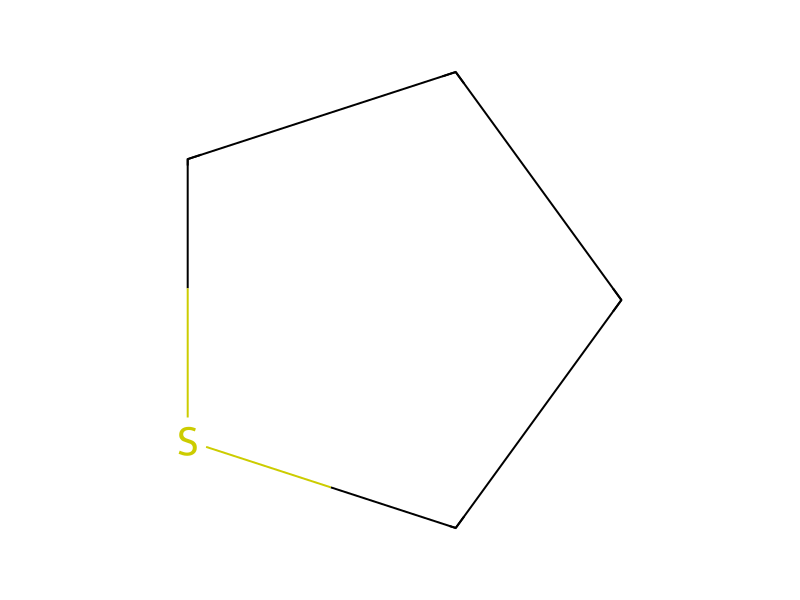
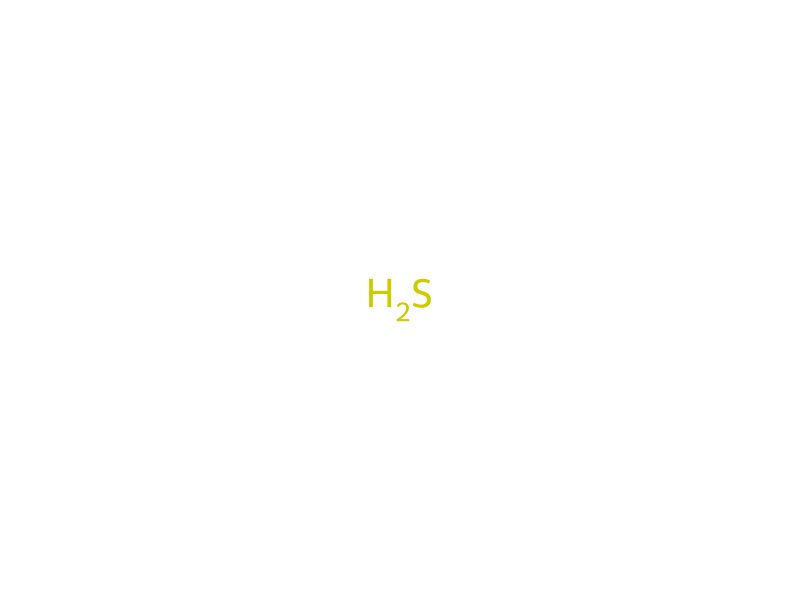
Tetrahydrothiophene → Hydrogen Sulfide
Reaction equation

[S:1]1[CH:5]=[CH:4][CH:3]=[CH:2]1.[S:6]1[CH2:10][CH2:9][CH2:8][CH2:7]1.[CH3:11][CH2:12][CH2:13][CH2:14]S>>[CH3:7][CH2:8][CH2:9][CH2:10][CH2:5][CH2:4][CH2:3][CH2:2][SH:1].[CH3:11][C:12]([CH2:13][C:14]([CH3:14])([CH3:13])[CH3:12])=[CH2:11].[SH2:6]Participants
6




Procedure
Thiophene hydrodesulfurization proceeds in the first reactor. Because a catalyst with low hydrogenation activity was used, no thiacyclopentane or butylthiol production was found in the thiophene hydrogenation product. Octylthiol was also produced by reaction between diisobutylene and hydrogen sulfide generated by the hydrodesulfurization. In the second reactor, the octylthiol produced by the first reactor was hydrodesulfurized, yielding a model gasoline base with a total sulfur content of no greater than 10 ppm by weight.
Sources & evidence
- ORD record
- ord-e50dcea785a74c798fdc9732f3598bbf
- Source dataset
- uspto-grants-2012_11
- Patent number
- US08303805B2
Reaction notes
Loading…