Sodium Carbonate → 2-[2-Bromo-4-(trifluoromethoxy)phenyl]-4,4-dimethyl-4,5-dihydro-1,3-oxazole
Reaction equation

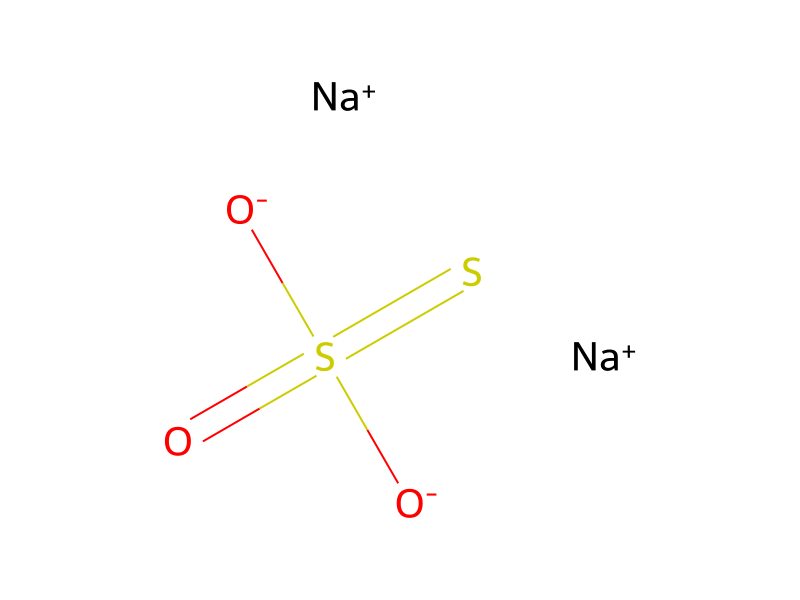
[CH3:1][C:2]1([CH3:18])[CH2:6][O:5][C:4]([C:7]2[CH:12]=[CH:11][C:10]([O:13][C:14]([F:17])([F:16])[F:15])=[CH:9][CH:8]=2)=[N:3]1.[Li]CCCC.[Br:24]Br.C(=O)([O-])[O-].[Na+].[Na+].S([O-])([O-])(=O)=S.[Na+].[Na+]>CCOCC.CCCCCC.O1CCCC1>[Br:24][C:12]1[CH:11]=[C:10]([O:13][C:14]([F:17])([F:15])[F:16])[CH:9]=[CH:8][C:7]=1[C:4]1[O:5][CH2:6][C:2]([CH3:18])([CH3:1])[N:3]=1Participants
Reactant 5




Product 1

Reagents, catalysts & solvents 3



Conditions
- Temperature
- -20 °C
Procedure
To a 50 ml round bottom flask was loaded 4,4-dimethyl-2-[4-(trifluoromethoxy)phenyl]-4,5-dihydro-1,3-oxazole (0.5 g, 1.93 mmol) and 7 ml tetrahydrofuran. The resulting solution was cooled with dry ice acetone bath, and nbutyllithium (nBuLi) (2.5 M hexane solution, 0.85 ml, 2.12 mmol) was added via a syringe. The resulting reaction mixture was allowed to warm up to −20° C. and stirred at this temperature for 30 minutes. The reaction mixture was cooled back to −78° C. It was quenched by addition of bromine (0.109 ml, 2.12 mmol), followed by 10 ml saturated sodium carbonate and 10 ml sodium thiosulfate solution. The resulting mixture was diluted with 30 ml ether. The layers were separated, and the organics were dried over sodium sulfate, filtered and concentrated to give 0.60 g light yellow liquid. It was used for the next step without further purification.
Workup
- customTo a 50 ml round bottom flask was loaded
- temperatureThe resulting solution was cooled with dry ice acetone bath
- customThe resulting reaction mixture
- temperatureThe reaction mixture was cooled back to −78° C
- customThe layers were separated
- dry with materialthe organics were dried over sodium sulfate
- filtrationfiltered
- concentrationconcentrated
Sources & evidence
- ORD record
- ord-41ae2e98e3ec49e8933f0cbb4a7a10bf
- Source dataset
- uspto-grants-2012_11
- Patent number
- US08304434B2
Reaction notes
Loading…