Potassium Carbonate → N-(3-propoxynaphthalen-2-yl)acetamide
Reaction equation

[OH:1][C:2]1[C:3]([NH:12][C:13](=[O:15])[CH3:14])=[CH:4][C:5]2[C:10]([CH:11]=1)=[CH:9][CH:8]=[CH:7][CH:6]=2.I[CH2:17][CH2:18][CH3:19].C(=O)([O-])[O-].[K+].[K+]>C(#N)C>[CH2:17]([O:1][C:2]1[C:3]([NH:12][C:13](=[O:15])[CH3:14])=[CH:4][C:5]2[C:10]([CH:11]=1)=[CH:9][CH:8]=[CH:7][CH:6]=2)[CH2:18][CH3:19]Participants
Reactant 3


Product 1

Reagents, catalysts & solvents 1

Procedure
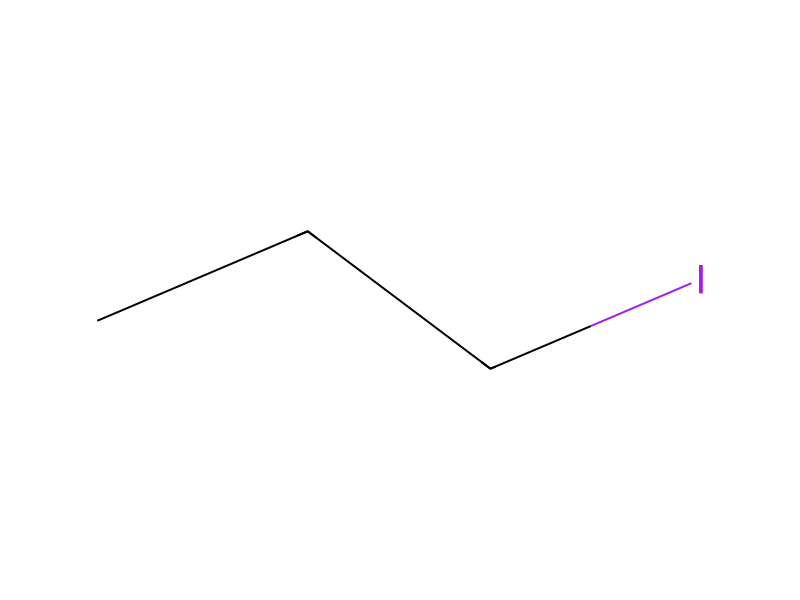
N-(3-Hydroxynaphthalen-2-yl)acetamide (4.87 g, 24.2 mmol) was suspended in acetonitrile (50 ml). A 1-iodopropane (4.52 g, 26.6 mmol) acetonitrile solution (40 ml) and potassium carbonate (4.35 g, 31.5 mmol) were added thereto, and the resulting mixture was stirred for 3 hours while heating under reflux. The mixture was then cooled to room temperature and concentrated to dryness under reduced pressure. Water was added to the residue, followed by extraction using dichloromethane. The thus-obtained organic layer was concentrated to dryness under reduced pressure, and the residue was then purified using silica gel column chromatography (dichloromethane:ethyl acetate=20:1). The purified product was concentrated to dryness under reduced pressure, giving a white powder of N-(3-propoxynaphthalen-2-yl)acetamide (5.64 g, yield: 96%).
Workup
- temperaturewhile heating
- temperatureunder reflux
- concentrationconcentrated to dryness under reduced pressure
- additionWater was added to the residue
- extractionfollowed by extraction
- concentrationThe thus-obtained organic layer was concentrated to dryness under reduced pressure
- customthe residue was then purified
- concentrationThe purified product was concentrated to dryness under reduced pressure
Sources & evidence
- ORD record
- ord-9dd1381357ba482da802ad439286e03b
- Source dataset
- uspto-grants-2012_11
- Patent number
- US08304546B2
Reaction notes
Loading…