Sodium hydride → HCID 86590010, compound
Reaction equation

[Cl:1][C:2]1[CH:7]=[CH:6][C:5]([C@@H:8]2[O:12][C:11](=[N:13][N+:14]([O-:16])=[O:15])[NH:10][C@H:9]2[CH3:17])=[CH:4][CH:3]=1.[H-].[Na+].[Cl:20][C:21]1[CH:26]=[CH:25][C:24]([CH2:27]Cl)=[CH:23][N:22]=1>CN(C=O)C>[Cl:1][C:2]1[CH:3]=[CH:4][C:5]([C@@H:8]2[O:12][C:11](=[N:13][N+:14]([O-:16])=[O:15])[N:10]([CH2:27][C:24]3[CH:25]=[CH:26][C:21]([Cl:20])=[N:22][CH:23]=3)[C@H:9]2[CH3:17])=[CH:6][CH:7]=1Participants
5
Reactant 3

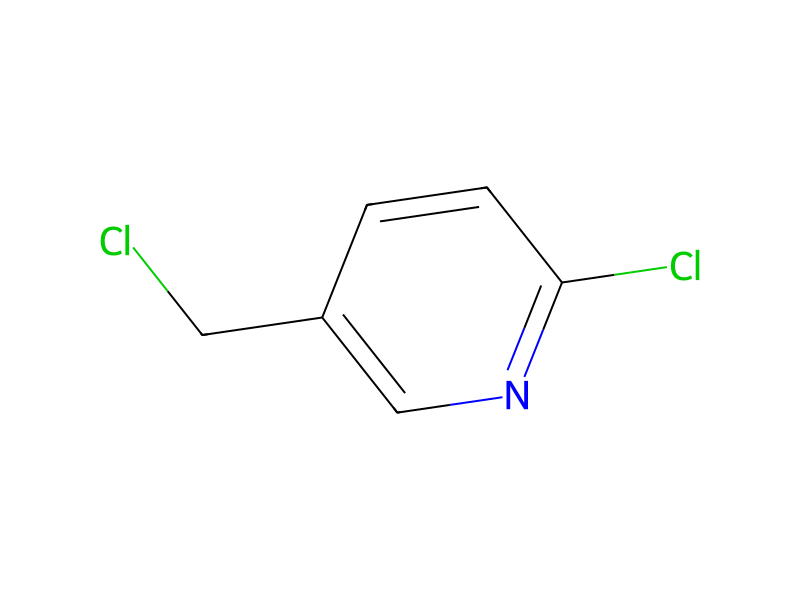

Product 1

Reagents, catalysts & solvents 1

Procedure
1.0 g of trans-5-(4-chlorophenyl)-4-methyl-2-nitroiminooxazolidine obtained in Example 1 and 0.2 g of 60% sodium hydride were added into 20 ml of DMF. 0.7 g of 2-chloro-5-chloromethylpyridine was added gradually to the mixture with stirring on cooling. Then, the mixture was further stirred for 6 hours at 70° C., followed by pouring the reaction mixture into ice water. The solution was extracted with ethyl acetate, and the organic layer was dried and then condensed under reduced pressure. The oily product obtained was purified by column chromatography to give 0.5 g of the title compound.
Workup
- temperatureon cooling
- stirringThen, the mixture was further stirred for 6 hours at 70° C.
- extractionThe solution was extracted with ethyl acetate
- customthe organic layer was dried
- customcondensed under reduced pressure
- customThe oily product obtained
- customwas purified by column chromatography
Sources & evidence
- ORD record
- ord-5b3fa14768364fdb8e645a211ab8949f
- Source dataset
- uspto-grants-2004_07
- Patent number
- US06762200B2
Reaction notes
Loading…