Diisopropylamine → Bis(diisopropylamino)chlorophosphine
Reaction equation

[CH:1]([NH:4][CH:5]([CH3:7])[CH3:6])([CH3:3])[CH3:2].[P:8]([Cl:11])(Cl)Cl>C1C=CC=CC=1>[CH:1]([N:4]([P:8]([N:4]([CH:5]([CH3:7])[CH3:6])[CH:1]([CH3:3])[CH3:2])[Cl:11])[CH:5]([CH3:7])[CH3:6])([CH3:3])[CH3:2]Participants
4
Reactant 2

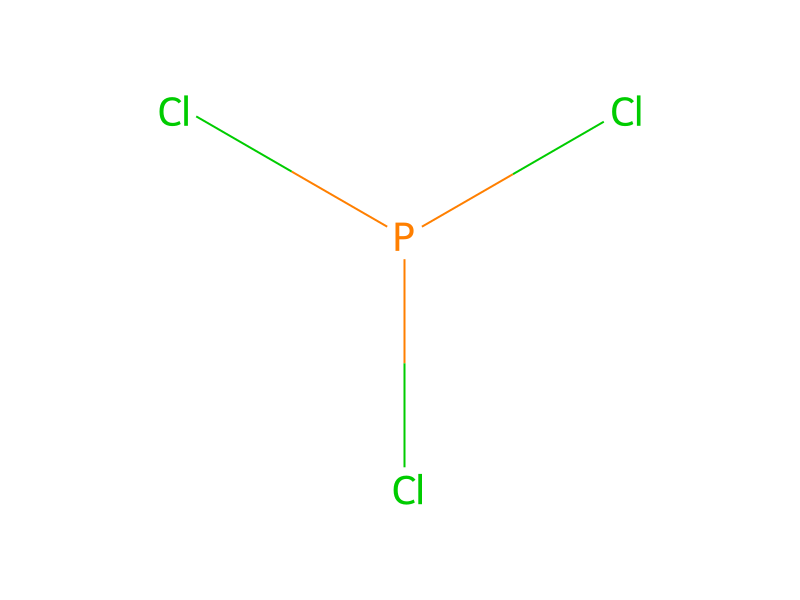
Product 1

Reagents, catalysts & solvents 1

Procedure
The synthesis shown in FIG. 2A can be carried out, for example, by adding anhydrous N,N-diisopropylamine to a solution of phosphorus trichloride in dry benzene to produce bis(N,N-diisopropylamino)chlorophosphine, and reacting it in situ with 2-(N-formyl-N-methyl) aminoethan-1-ol to produce phosphordiamidite 120 in about 73% yield. Phosphordiamidite 120 can then be reacted with a suitably protected nucleophile, such as 5′-O-(4,4′-dimethoxytrityl)-2′-deoxythymidine (Barone et al., Nucl. Acids Res., 12, 4051-4061 (1984)) to produce deoxyribonucleoside phosphoramidite 101 (FIG. 2A).
Sources & evidence
- ORD record
- ord-96f5a1818e4a4b4ca2624ee8a0550eec
- Source dataset
- uspto-grants-2004_07
- Patent number
- US06762298B2
Reaction notes
Loading…