Cyclopentadiene → HCID 53436388, compound
Reaction equation

[CH:1]1[CH2:5][CH:4]=[CH:3][CH:2]=1.[OH-].[K+].[C:8](Br)([CH3:11])([CH3:10])[CH3:9]>CCCCC>[C:8]([C:2]1([C:8]([CH3:11])([CH3:10])[CH3:9])[CH:1]=[CH:5][CH:4]=[CH:3]1)([CH3:11])([CH3:10])[CH3:9]Participants
Reactant 3
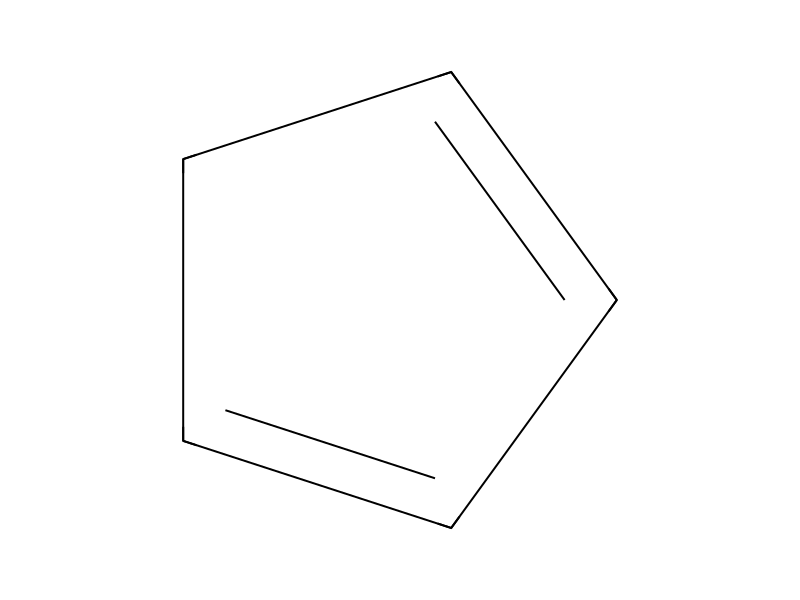


Product 1

Reagents, catalysts & solvents 1

Procedure
In this example, freshly distilled cyclopentadiene, a 50 wt % aqueous solution of potassium hydroxide, and tertiary-butyl bromide in the molar ratio of 1:40:5 were stirred together in a reactor. The quaternary ammonium halide, Adogen® 464 is added in the amount of one gram per mole of the potassium hydroxide. These reactants were stirred together and heated to 60° for 75 minutes and then at 100° for an additional 45 minutes. During the reaction foaming may occur which should be controlled. The reaction mixture is then cooled, diluted with pentane, washed with water and dried over magnesium sulfate. The pentane is then removed by vacuum. The crude residue contains the product and the Adogen® 464. Chromatography of the crude material over silica gel yielded di(tert-butyl)-cyclopentadiene. The overall calculated yield is 90 wt % based on the starting cyclopentadiene material.
Workup
- temperatureheated to 60° for 75 minutes
- temperatureThe reaction mixture is then cooled
- washwashed with water
- dry with materialdried over magnesium sulfate
- customThe pentane is then removed by vacuum
Sources & evidence
- ORD record
- ord-001f250499cf4fc9854864a62cc56371
- Source dataset
- uspto-grants-1992_09
- Patent number
- US05144095
Reaction notes
Loading…