Tricyclohexylphosphine → HCID 23120611, compound
Reaction equation

O.[C:2]1([CH3:12])[CH:7]=[CH:6][C:5]([S:8]([OH:11])(=[O:10])=[O:9])=[CH:4][CH:3]=1.[CH:13]1([P:19]([CH:26]2[CH2:31][CH2:30][CH2:29][CH2:28][CH2:27]2)[CH:20]2[CH2:25][CH2:24][CH2:23][CH2:22][CH2:21]2)[CH2:18][CH2:17][CH2:16][CH2:15][CH2:14]1>ClC1C=CC=CC=1.C(OCC)C>[C:2]1([CH3:12])[CH:3]=[CH:4][C:5]([S:8]([O-:11])(=[O:9])=[O:10])=[CH:6][CH:7]=1.[CH:26]1([PH+:19]([CH:13]2[CH2:14][CH2:15][CH2:16][CH2:17][CH2:18]2)[CH:20]2[CH2:25][CH2:24][CH2:23][CH2:22][CH2:21]2)[CH2:27][CH2:28][CH2:29][CH2:30][CH2:31]1Participants
5
Reactant 2
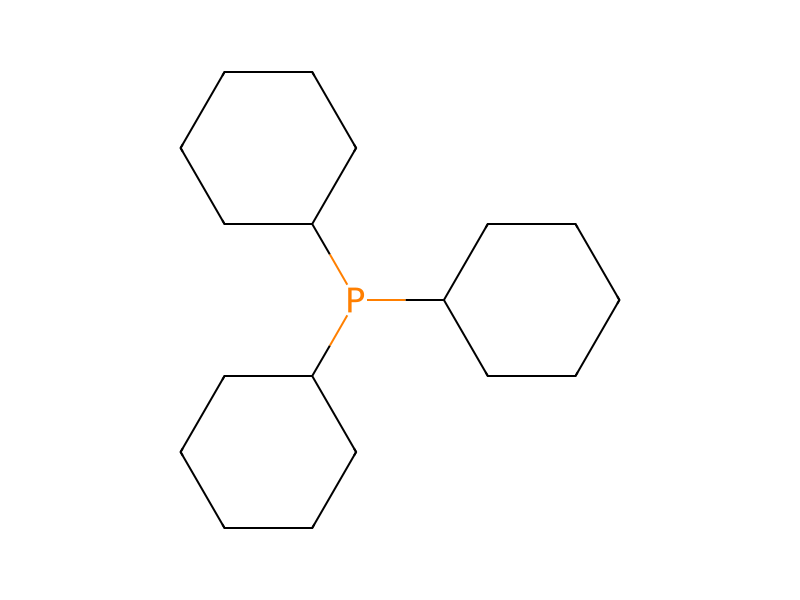

Product 1

Reagents, catalysts & solvents 2


Procedure
1.2 g (12 mmol) p-toluene sulfonic acid monohydrate is dissolved twice in 25 ml chlorobenzene each, and concentrated to dryness in order to remove the water aceotropically. The remaining residue is taken up in 25 ml diethylether and added to 25 ml of a solution of 12 mmol tricyclohexyl phosphine in diethylether. 4.2 g (77%) tricyclohexyl phosphonium p-toluene sulfonate is obtained as a colorless solid, which is filtered off and washed with diethylether.
Workup
- concentrationconcentrated to dryness in order
- customto remove the water aceotropically
Sources & evidence
- ORD record
- ord-0cc2f9eb16b94ee09bab411833f74b7e
- Source dataset
- uspto-grants-2013_08
- Patent number
- US08501985B2
Reaction notes
Loading…