Hydrochloric Acid → HCID 3433671, compound
Reaction equation

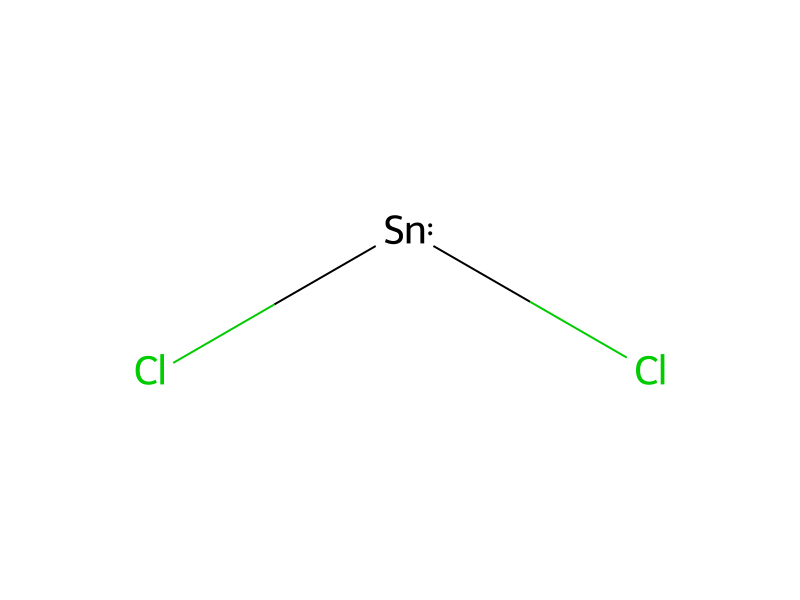
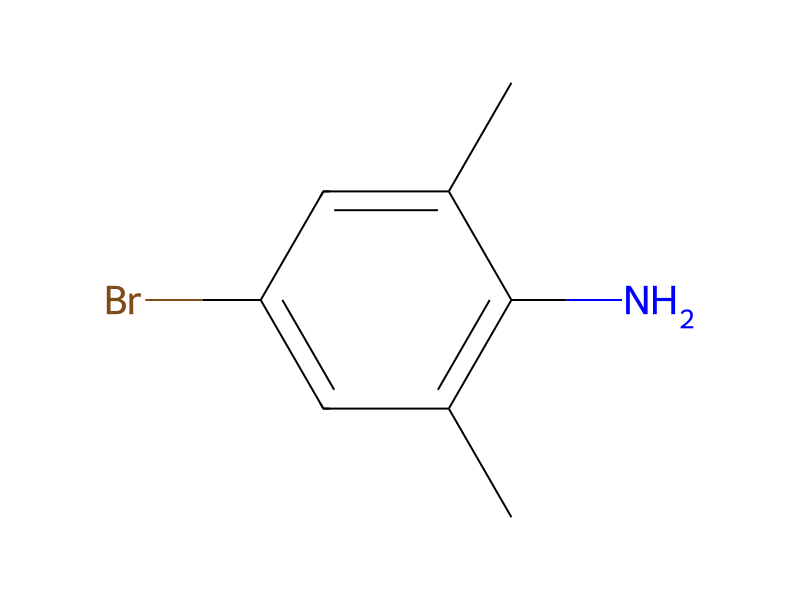
Cl.[Br:2][C:3]1[CH:8]=[C:7]([CH3:9])[C:6]([NH2:10])=[C:5]([CH3:11])[CH:4]=1.[N:12]([O-])=O.[Na+].[Sn](Cl)Cl>O>[Br:2][C:3]1[CH:8]=[C:7]([CH3:9])[C:6]([NH:10][NH2:12])=[C:5]([CH3:11])[CH:4]=1Participants
Reactant 4


Product 1

Reagents, catalysts & solvents 1

Conditions
- Temperature
- 2.5 °C
Procedure
In a 3 L 3-neck round bottom flask equipped with a mechanical stirrer was added concentrated hydrochloric acid (125 mL) and water (250 mL). 4-Bromo-2,6-dimethylbenzenamine (100 g, 500 mmol) was added slowly at 0° C. Stirring was continued for an additional 15 minutes, resulting in a thick white slurry. A freshly prepared solution of sodium nitrite (34.5 g, 500 mmol) in water (100 mL) was added to the slurry dropwise maintaining the internal temperature below 5° C. After stirring for 30 minutes, a deep orange solution was formed. Tin(II) chloride dehydrate (282 g, 1250 mmol) in 1:1 concentrated hydrochloric acid:water (300 mL) was added dropwise while maintaining the internal temperature between 0-5° C. The resulting mixture was stirred at 0° C. for 1 hour and then warmed to room temperature and stirred for 15 hours. The reaction mixture was filtered and washed with diethyl ether. The solid was slowly added to an aqueous 10 M solution of sodium hydroxide (1 L) between 0-10° C. and extracted with ethyl acetate (3×800 mL). The organic layer was washed with brine twice, dried over anhydrous sodium sulfate, and concentrated to give 1-(4-bromo-2,6-dimethylphenyl)hydrazine (76.0 g, 353 mmol). The hydrazine was dissolved in ethyl acetate (800 mL) to which hydrochloric acid/methanol (88.2 mL) was added. The mixture was stirred for 25 minutes. The reaction was filtered, washed with ethyl acetate until the solid is white. The white solid was dried in vacuo to afford 1-(4-bromo-2,6-dimethylphenyl)hydrazine hydrochloride (80.0 g, 64%). 1H NMR (400 MHz, DMSO-d6, δ): 9.71 (s, 3H), 7.32 (s, 2H), 6.78 (s, 1H), 2.37 (s, 6H).
Workup
- customIn a 3 L 3-neck round bottom flask equipped with a mechanical stirrer
- customresulting in a thick white slurry
- temperaturedropwise maintaining the internal temperature below 5° C
- stirringAfter stirring for 30 minutes
- customa deep orange solution was formed
- stirringThe resulting mixture was stirred at 0° C. for 1 hour
- temperaturewarmed to room temperature
- stirringstirred for 15 hours
- filtrationThe reaction mixture was filtered
- washwashed with diethyl ether
- additionThe solid was slowly added to an aqueous 10 M solution of sodium hydroxide (1 L) between 0-10° C.
- extractionextracted with ethyl acetate (3×800 mL)
- washThe organic layer was washed with brine twice
- dry with materialdried over anhydrous sodium sulfate
- concentrationconcentrated
Sources & evidence
- ORD record
- ord-1716b621b15e4209b139e3e4c085a7a7
- Source dataset
- uspto-grants-2013_08
- Patent number
- US08507533B2
Reaction notes
Loading…