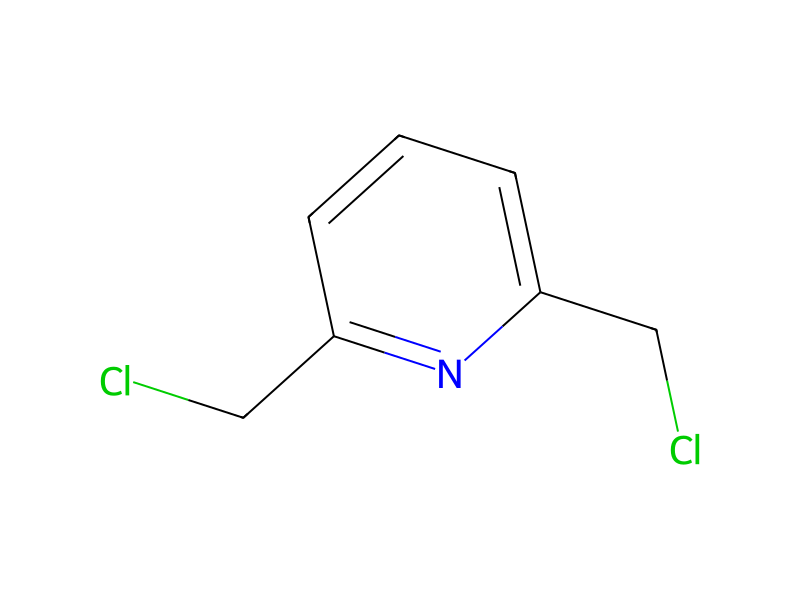
2,6-Bis(chloromethyl)pyridine → HCID 15398915, compound
Reaction equation

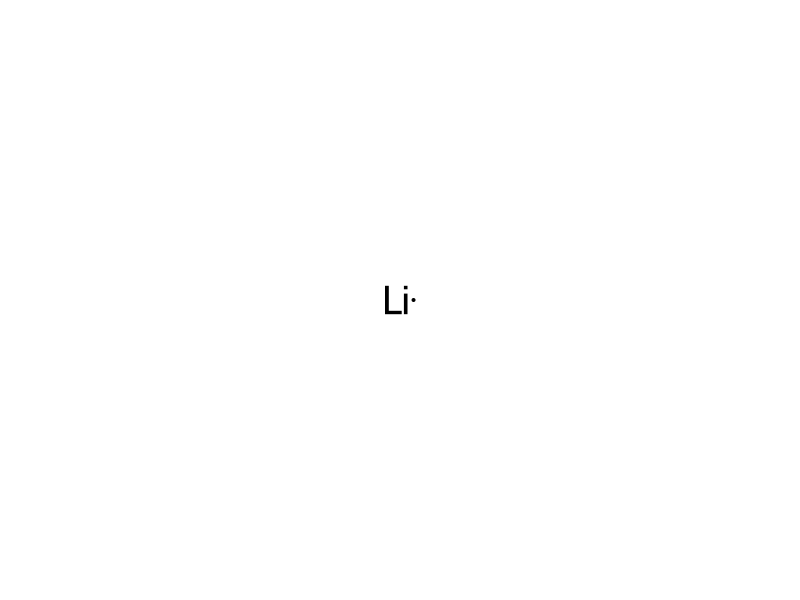
Cl[P:2]([CH:6]([CH3:8])[CH3:7])[CH:3]([CH3:5])[CH3:4].[Li].Cl[CH2:11][C:12]1[CH:17]=[CH:16][CH:15]=[C:14]([CH2:18]Cl)[N:13]=1>O1CCCC1>[CH:3]([P:2]([CH2:11][C:12]1[CH:17]=[CH:16][CH:15]=[C:14]([CH2:18][P:2]([CH:6]([CH3:8])[CH3:7])[CH:3]([CH3:5])[CH3:4])[N:13]=1)[CH:6]([CH3:8])[CH3:7])([CH3:5])[CH3:4]Participants
Reactant 3

Product 1

Reagents, catalysts & solvents 1

Conditions
- Temperature
- -80 °C
Procedure
Chloro diisopropylphosphine (10.0 g, 65.5 mmol) in 50 ml of tetrahydrofuran was added dropwise to a suspension of lithium (containing ca. 0.5% Na) granules (1.18 g, 170 mmol) in 50 ml of tetrahydrofuran and the mixture was stirred for 72 hours. The reaction mixture was then filtered, cooled to −80° C., and a solution of 2,6-bis(chloromethyl)pyridine (5.98 g, 34 mmol) in 20 ml of tetrahydrofuran was slowly added via a dropping funnel with vigorous stirring, resulting in the formation of a red solution. The mixture was allowed to warm to room temperature and was then refluxed for one hour. The reaction was followed by 31P NMR spectroscopy to ensure completion and then the solvent was removed in vacuo. Hexanes (50 ml) and water (25 ml) were then added and the water layer was then removed. The hexanes layer was then filtered sequentially through a layer of sodium sulfate (Na2SO4) and silica gel and then the hexane was removed in vacuo to afford a yellow oil. Excess unreacted diisopropylphosphine can be removed in vacuo at 70° C. for 2 hours. Yield: 8.2 g (37%). 1H NMR (400 MHz, C6D6): δ 7.28 (m, 2 H, 3- and 5-H), 7.13 (m, 1H, 4-H), 3.12 (s, 4H, CH2), 1.89 (m, 4H, CH(CH3)2), 1.23 (m, 24H, CH(CH3)2). 31P{1H} NMR (162 MHz, C6D6): δ 7.0.
Workup
- filtrationThe reaction mixture was then filtered
- customresulting in the formation of a red solution
- temperatureto warm to room temperature
- temperaturewas then refluxed for one hour
- customthe solvent was removed in vacuo
- additionHexanes (50 ml) and water (25 ml) were then added
- customthe water layer was then removed
- filtrationThe hexanes layer was then filtered sequentially through a layer of sodium sulfate (Na2SO4) and silica gel
- customthe hexane was removed in vacuo
- customto afford a yellow oil
- customExcess unreacted diisopropylphosphine can be removed in vacuo at 70° C. for 2 hours
Sources & evidence
- ORD record
- ord-b0f33423ddd5452595d47697f09f11f5
- Source dataset
- uspto-grants-2013_08
- Patent number
- US08518368B2
Reaction notes
Loading…