Propylamine → 4-n-Propylamino-cyclohexanone-ethyleneketal
Reaction equation

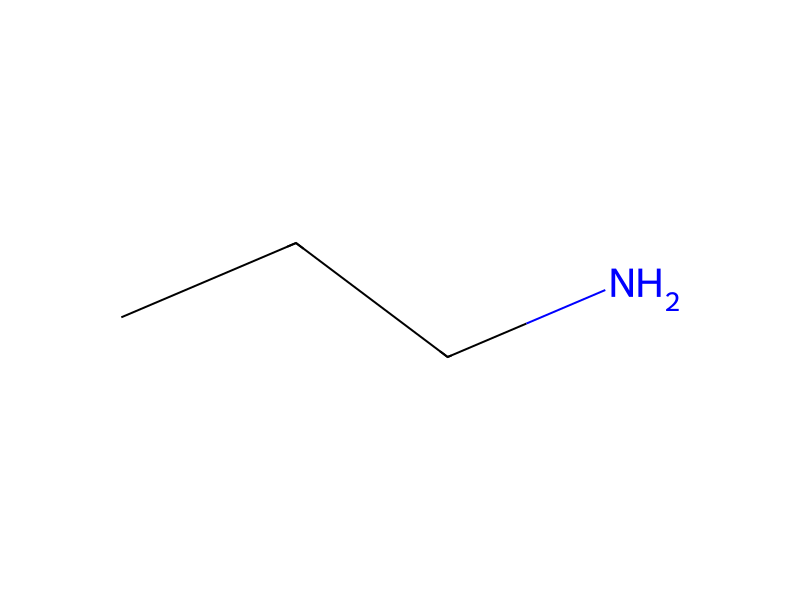
[O:1]1[C:5]2([CH2:10][CH2:9][C:8](=O)[CH2:7][CH2:6]2)[O:4][CH2:3][CH2:2]1.[CH2:12]([NH2:15])[CH2:13][CH3:14].C(O[BH-](OC(=O)C)OC(=O)C)(=O)C.[Na+]>C(#N)C>[CH2:12]([NH:15][CH:8]1[CH2:9][CH2:10][C:5]2([O:4][CH2:3][CH2:2][O:1]2)[CH2:6][CH2:7]1)[CH2:13][CH3:14]Participants
5
Reactant 3


Product 1

Reagents, catalysts & solvents 1

Procedure
1,4-dioxaspiro[4.5]decan-8-one (2 g, 12.8 mmol), and propylamine (1.05 mL, 12.8 mmol), and sodium triacetoxyborohydride (8 g, 38 mmol) were taken in acetonitrile and stirred for 18 h at room temperature. The mixture concentrated under vacuum and the residue basified with NaHCO3, saturated with solid NaCl and extracted with EtOAc/iPrOH (4:1) four times. Organic layer separated, dried over Na2SO4 and evaporated to give the title compound.
Workup
- concentrationThe mixture concentrated under vacuum
- extractionextracted with EtOAc/iPrOH (4:1) four times
- customOrganic layer separated
- dry with materialdried over Na2SO4
- customevaporated
Sources & evidence
- ORD record
- ord-4df76b705bf6497bb46b377b2f2e4c78
- Source dataset
- uspto-grants-2013_08
- Patent number
- US08518969B2
Reaction notes
Loading…