Water → 107797-60-4
Reaction equation

O.[OH:2][C@H:3]1[CH2:7][NH:6][C@H:5]([C:8]([OH:10])=O)[CH2:4]1.O1CCC[CH2:12]1.B(F)(F)F.CCOCC>C=O.C(O)=O>[OH:2][C@H:3]1[CH2:7][N:6]([CH3:12])[C@H:5]([CH2:8][OH:10])[CH2:4]1Participants
Reactant 4



Product 1

Reagents, catalysts & solvents 2


Conditions
- Temperature
- 0 °C
Procedure
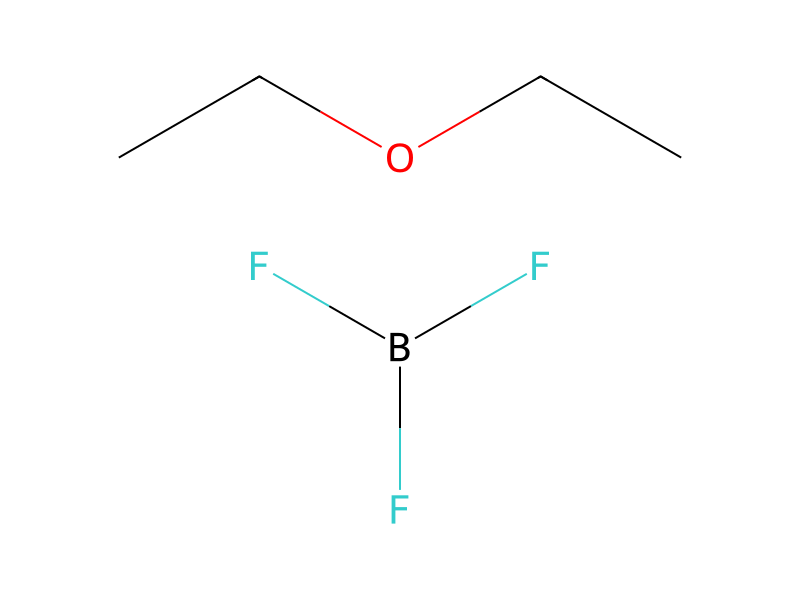
A 2-L three-necked, round-bottomed flask was equipped with a mechanical stirrer, heating mantel, 250-mL graduated additional funnel, and an 8-in., air-cooled vigreux column topped with a water-cooled distillation head and a 1-L receiving flask. The assembly was flushed with nitrogen and charged with trans-4-hydroxy-L-proline (100 g, 0.76 mol) and tetrahydrofuran (THF, 1.2 L), and boron trifluoride etherate (123.9 g, 0.88 mol). The mixture was heated at a rate sufficient to cause the THF to reflux gently and borane-methyl sulfide complex (360 mL, 3.6 mol) was added dropwise over 2 hrs. The solution was then refluxed for 24 hrs. The methyl sulfide, collected at stillhead was discarded, and the reaction mixture was cooled to 0° C. and quenched by the slow addition of methanol (300 mL). The reaction mixture was concentrated by distillation at reduced pressure and the residue was dissolved in 6N sodium hydroxide (1 L) and refluxed for 6 hrs. After cooling to room temperature, the insoluble material was removed by filtration and the filtrate was concentrared at reduced pressure. In order to remove the insoluble materials, the residue was dissolved in 2-propanol (1 L), filtered and concentrated. The operation was repeated three times, affording an oil, which was dissolved in 35% formaldehyde solution (200 mL) and formic acid (600 mL). The reaction mixture was refluxed for 24 hrs and concentrated at reduced pressure. The residue was dissolved in methanol (800 mL) and treated with potassium carbonate (100 g) and refluxed for 6 h. The mixture was cooled to room temperature and filtered. The filtrate was concentrated and dissolved in methylene chloride (600 mL) and filtered again. The filtrate was concentrated and Kugelrohr distilled (200°-220° C./1 mmHg) to give (2S, 4R)-4-hydroxy-1-methyl-2-pyrrolidinemethanol (54.48 g, 54.5%) as a viscous oil.
Workup
- customA 2-L three-necked, round-bottomed flask was equipped with a mechanical stirrer
- temperatureheating mantel, 250-mL
- temperature, air-cooled vigreux column
- temperaturecooled
- distillationdistillation head and a 1-L receiving flask
- customThe assembly was flushed with nitrogen
- temperatureThe mixture was heated at a rate sufficient
- temperatureto reflux gently
- additionborane-methyl sulfide complex (360 mL, 3.6 mol) was added dropwise over 2 hrs
- temperatureThe solution was then refluxed for 24 hrs
- customThe methyl sulfide, collected at stillhead
- customquenched by the slow addition of methanol (300 mL)
- concentrationThe reaction mixture was concentrated by distillation at reduced pressure
- dissolutionthe residue was dissolved in 6N sodium hydroxide (1 L)
- temperaturerefluxed for 6 hrs
- temperatureAfter cooling to room temperature
- customthe insoluble material was removed by filtration
- customIn order to remove the insoluble materials
- dissolutionthe residue was dissolved in 2-propanol (1 L)
- filtrationfiltered
- concentrationconcentrated
- customaffording an oil, which
- temperatureThe reaction mixture was refluxed for 24 hrs
- concentrationconcentrated at reduced pressure
- dissolutionThe residue was dissolved in methanol (800 mL)
- additiontreated with potassium carbonate (100 g)
- temperaturerefluxed for 6 h
- temperatureThe mixture was cooled to room temperature
- filtrationfiltered
- concentrationThe filtrate was concentrated
- dissolutiondissolved in methylene chloride (600 mL)
- filtrationfiltered again
- concentrationThe filtrate was concentrated
- distillationKugelrohr distilled (200°-220° C./1 mmHg)
Sources & evidence
- ORD record
- ord-7fae779db95d465b8263e4e4785e3a6f
- Source dataset
- uspto-grants-1996_11
- Patent number
- US05571909
Reaction notes
Loading…