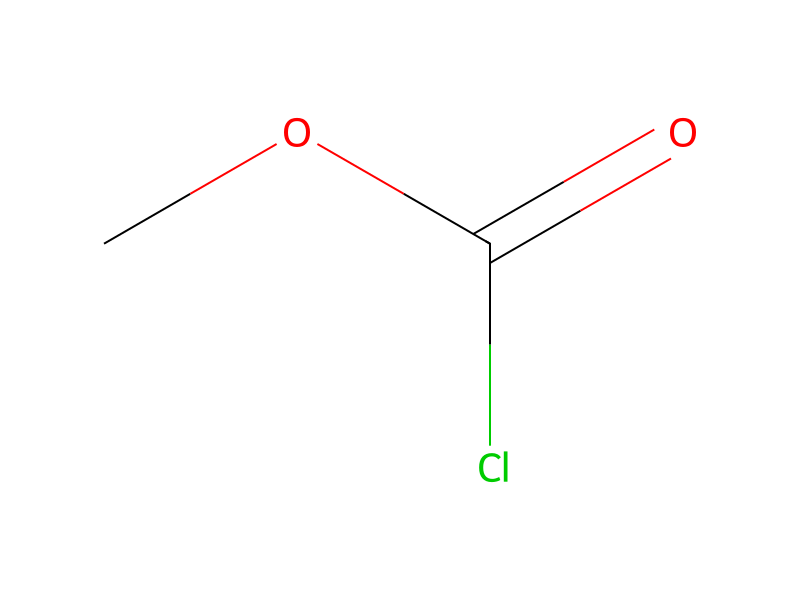
Methyl chloroformate → HCID 22912929, compound
Reaction equation

[F:1][C:2]1[CH:3]=[C:4]2[C:9](=[CH:10][CH:11]=1)[NH:8][C:7](=[O:12])[CH2:6][NH:5]2.C(N(C(C)C)CC)(C)C.[CH2:22]1COCC1.Cl[C:28]([O:30][CH3:31])=[O:29]>O>[CH3:22][N:8]1[C:9]2[C:4](=[CH:3][C:2]([F:1])=[CH:11][CH:10]=2)[N:5]([C:28]([O:30][CH3:31])=[O:29])[CH2:6][C:7]1=[O:12]Participants
6
Reactant 4



Product 1

Reagents, catalysts & solvents 1

Procedure
To a mixture of 1.97 g of 6-fluoro-1,2,3,4-tetrahydroquinoxalin-2-one (EXAMPLE 6), 3.1 ml of diisopropylethylamine, and 11 ml of THF is added 1.4 ml of methyl chloroformate. The reaction is cooled with cool tap water as an exotherm ensued. After 35 min, the mixture is partitioned between ethyl acetate, aq. sodium bicarbonate, and saline. The organic layers are dried over magnesium sulfate, concentrated, and the crude product is crystallized from dichloromethane/methanol/ethyl acetate to give 2.06 g of methyl 6-fluoro-1,2,3,4-tetrahydro-4-(methoxycarbonyl)quinoxaline-2-one; mp 206.5°-207.5°; NMR (CDCl3) 3.86, 4.43, 6.84, 7.48, 8.67 δ.
Workup
- temperatureThe reaction is cooled
- customthe mixture is partitioned between ethyl acetate, aq. sodium bicarbonate, and saline
- dry with materialThe organic layers are dried over magnesium sulfate
- concentrationconcentrated
- customthe crude product is crystallized from dichloromethane/methanol/ethyl acetate
Sources & evidence
- ORD record
- ord-92022b9411a947cc920e8751175a937b
- Source dataset
- uspto-grants-1996_11
- Patent number
- US05574038
Reaction notes
Loading…