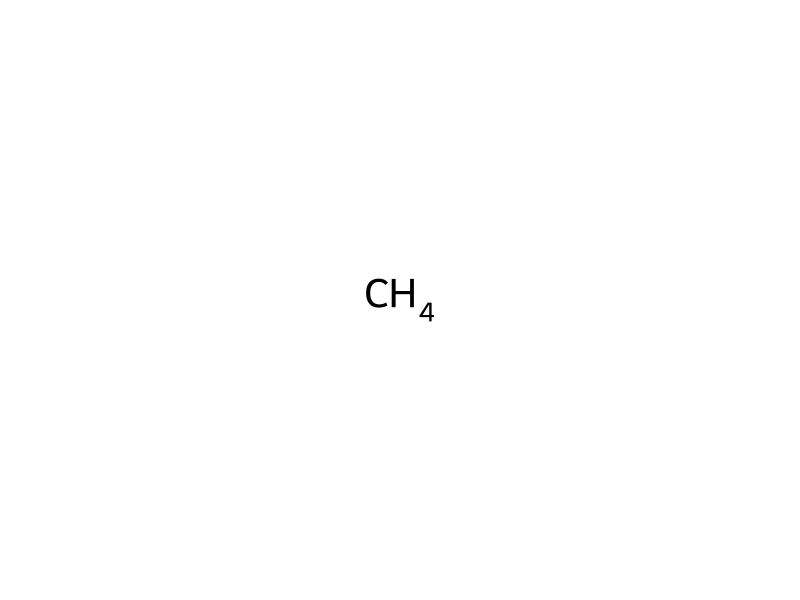
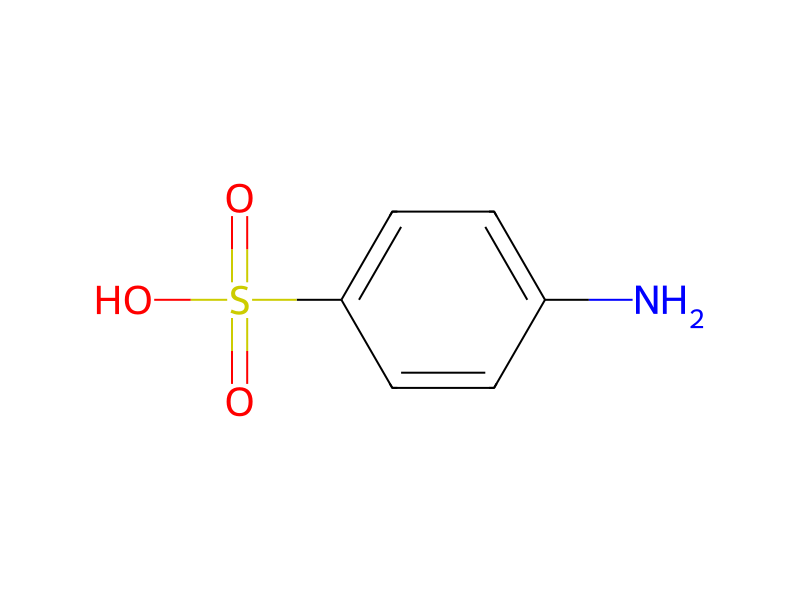
Methane → 4-Sulfobenzenediazonium hydroxide
Reaction equation

C.[S:2]([OH:12])(=[O:11])([C:4]1[CH:9]=[CH:8][C:7]([NH2:10])=[CH:6][CH:5]=1)=[O:3].[N:13]([O-])=O.[Na+]>O>[OH-:3].[S:2]([C:4]1[CH:5]=[CH:6][C:7]([N+:10]#[N:13])=[CH:8][CH:9]=1)([OH:12])(=[O:11])=[O:3]Participants
Reactant 3

Product 1

Reagents, catalysts & solvents 1

Procedure
This example illustrates the preparation of a carbon black product having an attached p-C6H4SO3- group. A fluffy carbon black (200 g) having a CTAB surface area of 350 m2 /g and a DBP of 120 cc/100 g carbon and 42.4 g sulfanilic acid were placed in the batch pin pelletizer. After mixing for 40 seconds by means of the rotor, a solution of 20.7 of sodium nitrite, NaNO2, in 150 g water was added to the pelletizer. 4-Sulfobenzene diazonium hydroxide inner salt is formed in situ which reacts with the carbon black. After mixing for 45 seconds by means of the rotor, the carbon black product was transformed into pellets. These were dried in an oven at 120° C. The pelletized product had handling properties at least comparable to conventionally pelletized carbon blacks and was dispersible. Using the aqueous residue test, it has a 325 mesh residue of 0.6% compared to 97% for the untreated, fluffy black.
Workup
- additionAfter mixing for 40 seconds by means of the rotor
Sources & evidence
- ORD record
- ord-37accc70e0a7447183880823371ccc5f
- Source dataset
- uspto-grants-1996_11
- Patent number
- US05575845
Reaction notes
Loading…