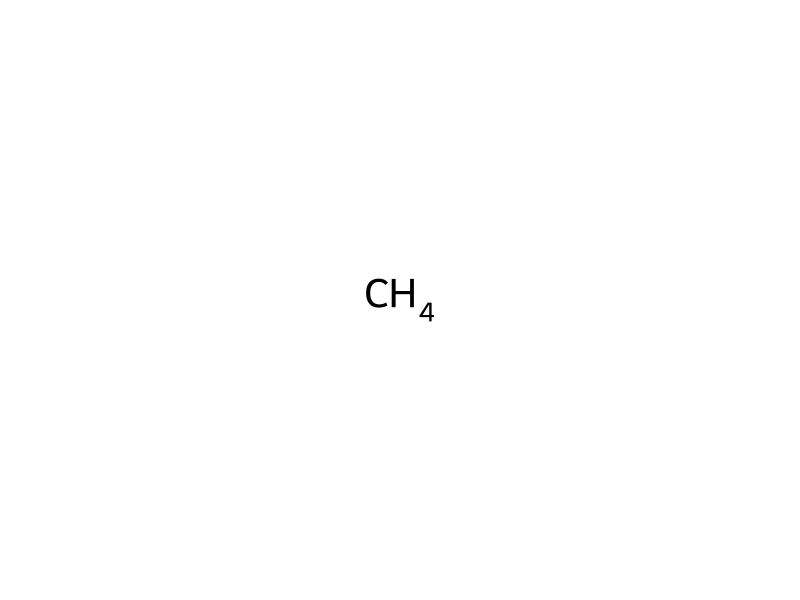
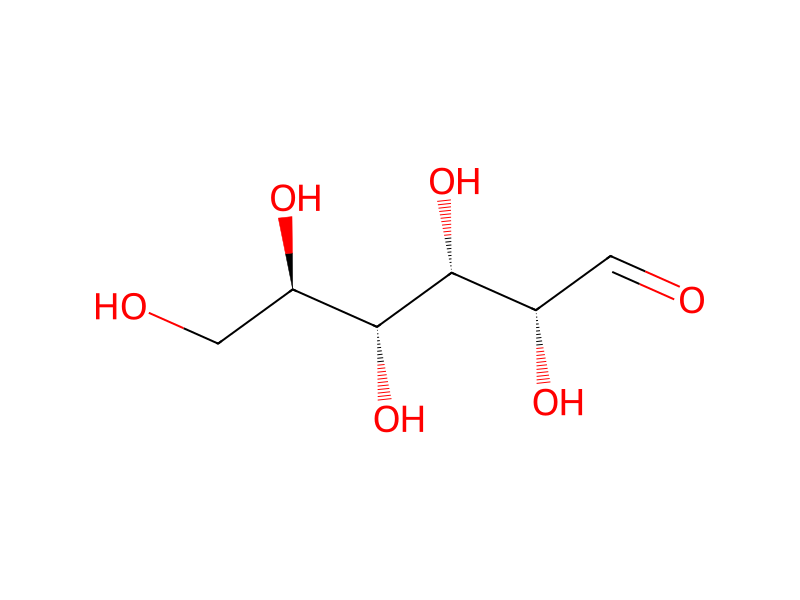
Methane → Trehalose
Reaction equation

[O:1]=[CH:2][C@@H:3]([C@H:5]([C@@H:7]([C@@H:9]([CH2:11][OH:12])[OH:10])[OH:8])[OH:6])[OH:4].[CH4:13]>>[CH2:11]([OH:12])[C@H:9]1[O:10][C@H:2]([O:1][C@H:13]2[O:4][C@H:3]([CH2:2][OH:1])[C@@H:5]([OH:6])[C@H:7]([OH:8])[C@H:9]2[OH:10])[C@H:3]([OH:4])[C@@H:5]([OH:6])[C@@H:7]1[OH:8]Participants

Conditions
- Temperature
- 45 °C
Procedure
Forty parts by weight of "PINE-DEX #4", a reducing partial starch hydrolysate having an average dextrose equivalent (DE) of 19±1 and an average DP of about 5, prepared by hydrolysing starch, purifying and pulverizing the resultant, available from Matsutani Chemical Ind., Co., Ltd., Kyoto, Japan, was dissolved by heating in 60 parts by weight of water, and the resultant solution was heated to 45° C., adjusted to pH 6.5, mixed with one unit/g reducing partial starch hydrolysate of a non-reducing saccharide-forming enzyme prepared by the method in Experiment 1-1, and incubated for 96 hours, followed by heating the resultant mixture at 100° C. for 10 min to inactivate the remaining enzyme. The solution thus obtained was diluted to give a concentration of about 20%, d.s.b., mixed with 10 units/g reducing partial starch hydrolysate of "GLUCOZYME", a glucoamylase specimen commercialized by Nagase Biochemicals, Ltd., Kyoto, Japan, and incubated for 40 hours, followed by heating the resultant mixture to inactivate the remaining enzyme. The solution thus obtained was in usual manner decolored with activated charcoal, desalted with ion-exchange resins, and concentrated into an about 60% solution containing 29.5% trehalose, d.s.b. The concentrated solution was fed to a jacketed-stainless steel column packed with "CG 6000, Na-form", a strong acidic cation exchange resin commercialized by Japan Organo, Co., Ltd., Tokyo, Japan, and fractionated at 60° C. and SV (space velocity) 0.4, followed by recovering a high trehalose content fraction containing about 90% trehalose, d.s.b. The fraction was concentrated into an about 75% w/w % solution, which was then transferred to a crystallizer, mixed with an about 2% hydrous crystalline trehalose as seed crystal, heated to 50° C., gradually cooled to 25° C. under gentle stirring conditions, and separated by a basket-type centrifuge. The resultant crystals were washed by spraying with a small amount of water to obtain a high-purity hydrous crystalline trehalose with a purity of 99% or higher, d.s.b.
Workup
- custompurifying
- dissolution, Kyoto, Japan, was dissolved
- temperatureby heating in 60 parts by weight of water
- additionmixed with one unit/g
- customforming enzyme
- customprepared by the method in Experiment 1-1
- customThe solution thus obtained
- additionwas diluted
- customto give a concentration of about 20%
- addition, mixed with 10 units/g
- wait, Kyoto, Japan, and incubated for 40 hours
- customThe solution thus obtained
- concentrationconcentrated into an about 60% solution
- additioncontaining 29.5% trehalose
- customfractionated at 60° C.
- customby recovering a high trehalose content fraction
- additioncontaining about 90% trehalose
- concentrationThe fraction was concentrated into an about 75% w/w % solution, which
- additionmixed with an about 2% hydrous crystalline trehalose as seed crystal
- temperatureheated to 50° C.
- temperaturegradually cooled to 25° C.
- customseparated by a basket-type centrifuge
- washThe resultant crystals were washed
Sources & evidence
- ORD record
- ord-e949ddefd36345eabdd03ca038ce5bc3
- Source dataset
- uspto-grants-1996_11
- Patent number
- US05576303
Reaction notes
Loading…