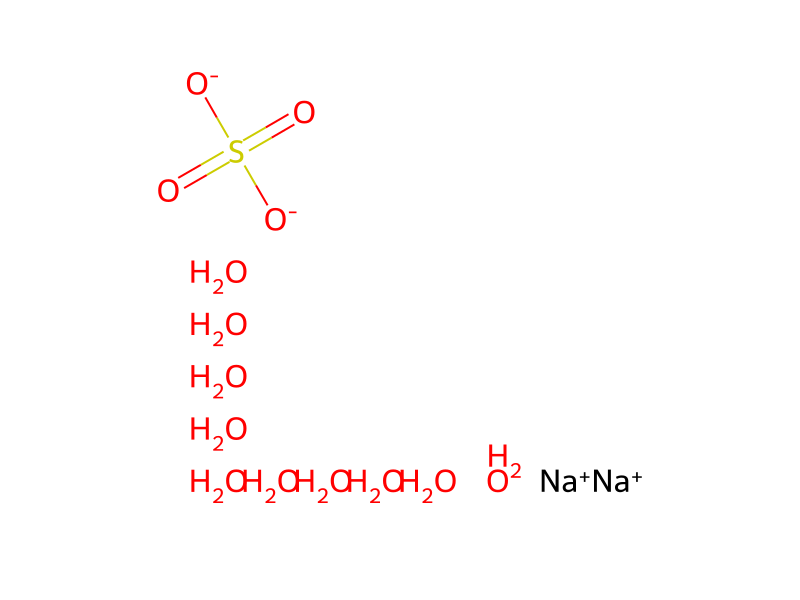
Sodium sulfate decahydrate → HCID 21474717, compound
Reaction equation

[Cl:1][C:2]1[CH:3]=[C:4]([CH:21]=[CH:22][CH:23]=1)[O:5][CH2:6][CH:7]1[CH2:12][N:11]([CH:13]([CH3:19])[C:14](OCC)=[O:15])[C:10](=O)[CH2:9][O:8]1.[H-].[Al+3].[Li+].[H-].[H-].[H-].O.O.O.O.O.O.O.O.O.O.S([O-])([O-])(=O)=O.[Na+].[Na+]>O1CCCC1>[Cl:1][C:2]1[CH:3]=[C:4]([CH:21]=[CH:22][CH:23]=1)[O:5][CH2:6][CH:7]1[CH2:12][N:11]([CH:13]([CH3:19])[CH2:14][OH:15])[CH2:10][CH2:9][O:8]1Participants
Reactant 3


Product 1

Reagents, catalysts & solvents 1

Procedure
A solution of 1.50 g of ethyl 2-[6-(3-chlorophenoxymethyl)-3-oxomorpholin-4-yl]propionate in 10 ml of anhydrous tetrahydrofuran was added dropwise to a suspension of 0.51 g of lithium aluminum hydride in 20 ml of anhydrous tetrahydrofuran, whilst ice-cooling. The mixture was stirred at room temperature for 2.5 hours, after which excess lithium aluminum hydride was decomposed by adding sodium sulfate decahydrate to the mixture. Insolubles were then removed from the reaction mixture by filtration with the help of a Celite (trade name) filter aid, and the solvent was removed from the filtrate by evaporation under reduced pressure, to give 0.97 g of the title compound having an Rf value of 0.19 (on silica gel thin layer chromatography, using a 3:1 by volume mixture of ethyl acetate and hexane as the developing solvent).
Workup
- temperaturecooling
- customInsolubles were then removed from the reaction mixture by filtration with the help of a Celite (trade name)
- filtrationfilter aid
- customthe solvent was removed from the filtrate by evaporation under reduced pressure
Sources & evidence
- ORD record
- ord-e215c7fad4f3495da96b90ff62b101c0
- Source dataset
- uspto-grants-1996_11
- Patent number
- US05578620
Reaction notes
Loading…