3-Phenoxybenzoic acid → 3-Phenoxybenzyl alcohol
Reaction equation

[O:1]([C:8]1[CH:9]=[C:10]([CH:13]=[CH:14][CH:15]=1)[CH:11]=[O:12])[C:2]1[CH:7]=[CH:6][CH:5]=[CH:4][CH:3]=1.O(C1C=C(C=CC=1)C(O)=O)C1C=CC=CC=1>>[O:1]([C:8]1[CH:9]=[C:10]([CH:13]=[CH:14][CH:15]=1)[CH2:11][OH:12])[C:2]1[CH:3]=[CH:4][CH:5]=[CH:6][CH:7]=1Participants
3

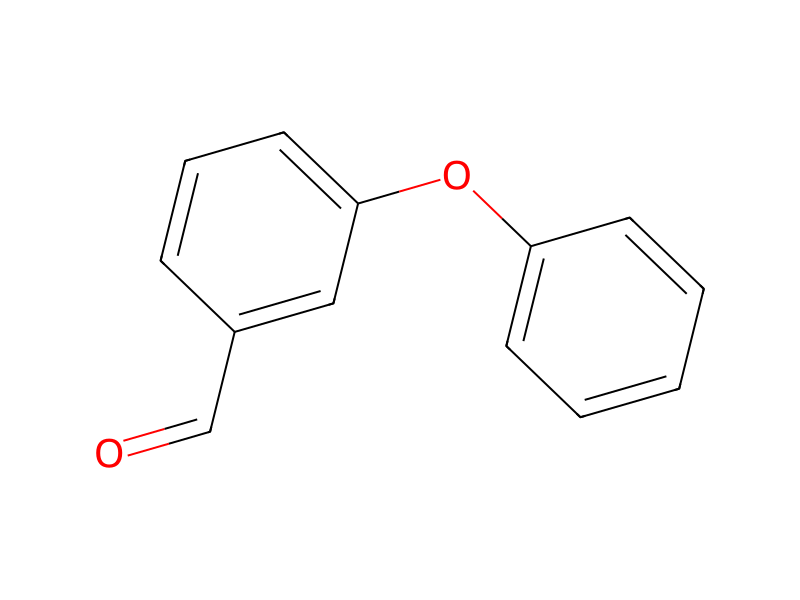
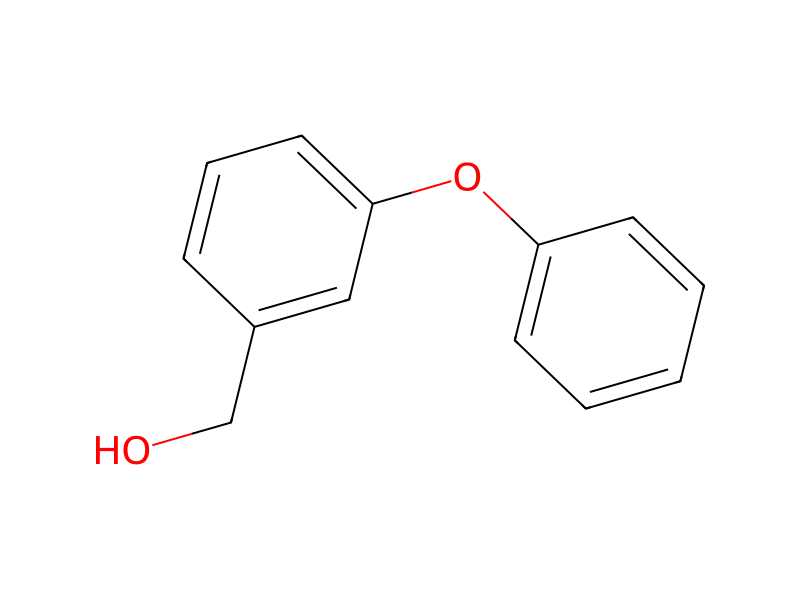
Procedure
After filtering off the catalyst, the filtrate (reaction mixture), which consists of an organic phase containing the 3-phenoxy-benzaldehyde and an aqueous-alkaline phase containing the 3-phenoxy-benzoic acid is extracted with ether. After drying the combined ether extracts over sodium sulphate and stripping off the ether under nitrogen, 9.4 g of a residue which, according to analysis by gas chromatography, contains 96.9% of 3-phenoxy-benzaldehyde and 1.3% of still unreacted 3-phenoxy-benzyl alcohol remain. This gives a 3-phenoxy-benzyl alcohol conversion of 98.8%, a 3-phenoxy-benzaldehyde yield of 93% of theory and a selectivity for 3-phenoxy-benzaldehyde of 94%.
Workup
- filtrationAfter filtering off the catalyst
- customthe filtrate (reaction mixture), which
- extractionis extracted with ether
- dry with materialAfter drying the combined ether
Sources & evidence
- ORD record
- ord-1ac8ec003e9b4cc7bf650fc42b3aadcc
- Source dataset
- uspto-grants-1982_12
- Patent number
- US04366325
Reaction notes
Loading…