Ammonia → Ethylparaben
Reaction equation

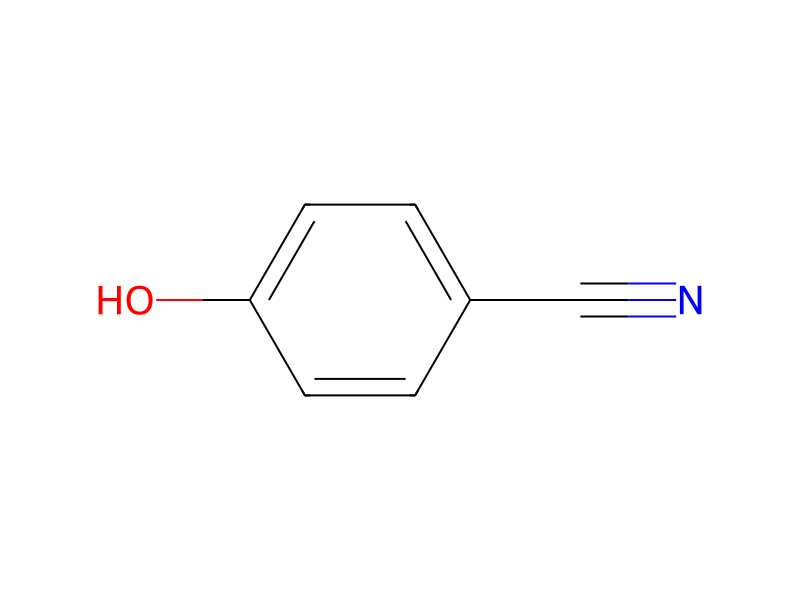
P([O-])([O-])([O-])=O.[B+3].[OH:7][C:8]1[CH:18]=[CH:17][C:11]([C:12]([O:14][CH2:15][CH3:16])=[O:13])=[CH:10][CH:9]=1.[NH3:19]>>[OH:7][C:8]1[CH:18]=[CH:17][C:11]([C:12]#[N:19])=[CH:10][CH:9]=1.[OH:7][C:8]1[CH:9]=[CH:10][C:11]([C:12]([O:14][CH2:15][CH3:16])=[O:13])=[CH:17][CH:18]=1Participants


Procedure
A reaction tube having an inside diameter of 5 cm was filled with 440 g of a supported catalyst containing 3.85% by weight of boron phosphate (P2O5 /B2O3 mole ratio being 1) deposited on silica pellets having a pore diameter of about 0.05 micron as a carrier. Ethyl p-hydroxybenzoate and ammonia were introduced into the reaction tube at a rate of 39.5 g/hr and 323.7 g/hr respectively, and reacted in the vapor phase at 400° C. The ratio of ammonia to ethyl p-hydroxybenzoate in the gaseous mixture was 80:1, and the contact time was 10 seconds. When the reaction was continued for 19 hours, 511.1 g of p-hydroxybenzonitrile was obtained from 750.5 g of ethyl p-hydroxybenzoate. The yield was 95.0%. Gas chromatographic analysis showed that phenol was formed as a by-product in an amount of only 0.2% by weight.
Workup
- customA reaction tube having
- customreacted in the vapor phase at 400° C
- waitWhen the reaction was continued for 19 hours
Sources & evidence
- ORD record
- ord-edd58421a098409c89da7fdc5d5a496a
- Source dataset
- uspto-grants-1984_03
- Patent number
- US04436670
Reaction notes
Loading…