Potassium Bicarbonate → Anthraquinone
Reaction equation

N[C:2]1[C:15]2[C:14](=[O:16])[C:13]3[C:8](=[CH:9][CH:10]=[CH:11][CH:12]=3)[C:7](=[O:17])[C:6]=2[C:5](NC2C=CC=C(O)C=2)=[CH:4][C:3]=1S(C)(=O)=O.C(=O)([O-])O.[K+].FN1N=C(F)C=C(N(C)C2C=CC=CC=2)N1>O1CCCC1>[CH:9]1[C:8]2[C:7](=[O:17])[C:6]3[C:15](=[CH:2][CH:3]=[CH:4][CH:5]=3)[C:14](=[O:16])[C:13]=2[CH:12]=[CH:11][CH:10]=1Participants
5
Reactant 3


Product 1
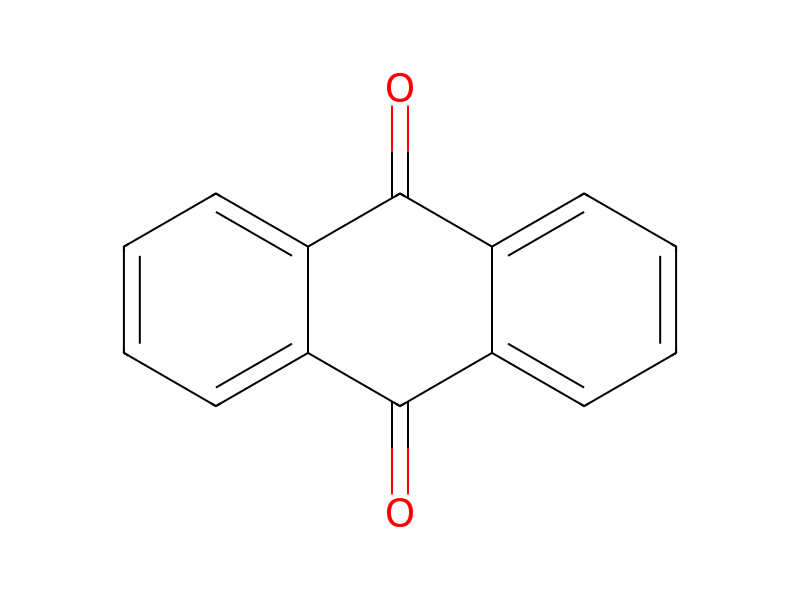
Reagents, catalysts & solvents 1

Procedure
To tetrahydrofuran (100 ml), 1-amino-2-methylsulfonyl-4-(3-hydroxyanilino)anthraquinone (4.08 g), potassium hydrogencarbonate (2.0 g) and 2,4-difluoro-6-(N-methyl-N-phenylamino)triazine (2.35 g) were added, and the mixture was subjected to condensation by heating under reflux for 1.5 hours. The reaction liquor was treated as in Example 6 to produce 5.8 g of an anthraquinone dye of the following formula in a yield of 95%. ##STR47## The dye had a λ max (acetone) of 620 nm.
Workup
- customthe mixture was subjected to condensation
- temperatureby heating
- temperatureunder reflux for 1.5 hours
- additionThe reaction liquor was treated as in Example 6
Sources & evidence
- ORD record
- ord-fd90bd34bb644e58b98bc1761f276136
- Source dataset
- uspto-grants-1984_03
- Patent number
- US04436906
Reaction notes
Loading…