Hydrochloric Acid → 2,4-tert-butyl-6-hydroxym ethyl-phenol
Reaction equation

[C:1]([C:5]1[CH:10]=[C:9]([C:11]([CH3:14])([CH3:13])[CH3:12])[CH:8]=[CH:7][C:6]=1[OH:15])([CH3:4])([CH3:3])[CH3:2].[CH2:16]=[O:17].B(O)(O)O.Cl>CCOCC.CCCCC.C1(C)C=CC=CC=1>[C:1]([C:5]1[CH:10]=[C:9]([C:11]([CH3:14])([CH3:13])[CH3:12])[CH:8]=[C:7]([CH2:16][OH:17])[C:6]=1[OH:15])([CH3:4])([CH3:3])[CH3:2]Participants
8



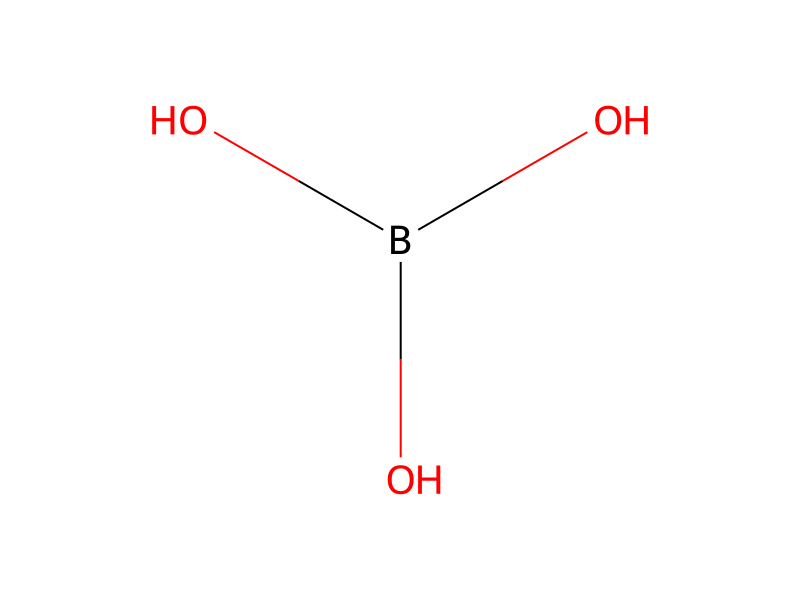




Conditions
- Temperature
- 80 °C
Procedure
2,4-Di-t-butylphenol (20.63 gr., 0.1 mole), paraformaldehyde (3.0 gr., 0.1 mol), boric acid (6.18 g., 0.1 mol) and toluene (50 ml.) were charged into a flask and heated at 80° C. under nitrogen for 48 hours. The mixture was filtered and the solvent removed to provide a brown oil. This oil was dissolved in ether and stirred with an equal volume of 1 N HCl for 2 hours. The ether layer was removed, washed with water, dried (MgSO4) and evaporated to form a soft yellow solid. This solid was stirred in pentane and then filtered to afford a white solid with a melting point of 97°-99° C. The structure was confirmed by NMR and FD/MS.
Workup
- filtrationThe mixture was filtered
- customthe solvent removed
- customto provide a brown oil
- customThe ether layer was removed
- washwashed with water
- dry with materialdried (MgSO4)
- customevaporated
- customto form a soft yellow solid
- filtrationfiltered
- customto afford a white solid with a melting point of 97°-99° C
Sources & evidence
- ORD record
- ord-d3c16c24d6894ae9be01a77253f270db
- Source dataset
- uspto-grants-1984_03
- Patent number
- US04439564
Reaction notes
Loading…