Hydrochloric Acid → Propanoic acid, 2-(4-hydroxyphenoxy)-, ethyl ester
Reaction equation

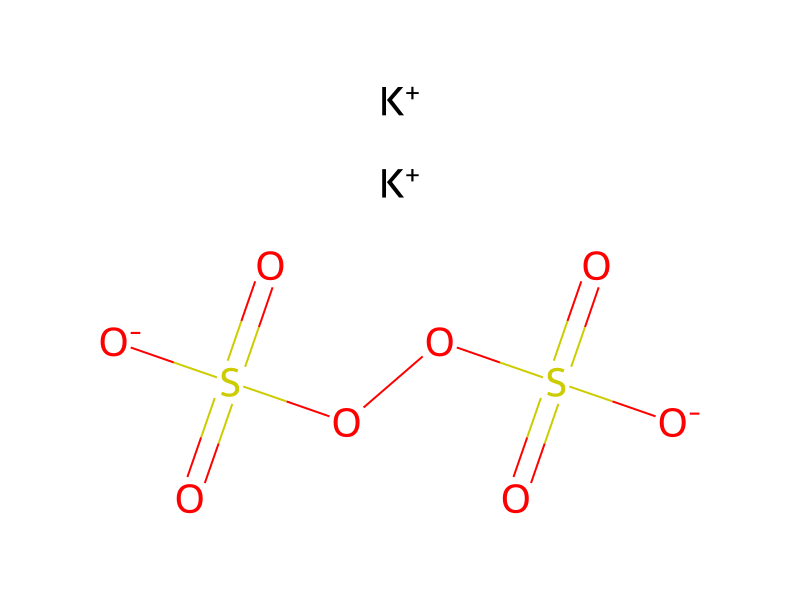
S(OOS([O-])(=O)=O)([O-])(=O)=[O:2].[K+].[K+].[C:13]1([OH:19])[CH:18]=[CH:17][CH:16]=[CH:15][CH:14]=1.Cl.Br[CH:22]([CH3:28])[C:23]([O:25][CH2:26][CH3:27])=[O:24]>O.[OH-].[Na+]>[OH:19][C:13]1[CH:18]=[CH:17][C:16]([O:2][CH:22]([CH3:28])[C:23]([O:25][CH2:26][CH3:27])=[O:24])=[CH:15][CH:14]=1Participants






Conditions
- Temperature
- 20 °C
Procedure
A solution of potassium persulfate (27 g, 0.1 mole) in water (500 ml) was added slowly to a stirred solution of phenol (9.4 g, 0.1 mole) in aqueous 10% sodium hydroxide (200 ml) which was maintained at or below a temperature of 20° C. throughout the addition. After stirring for a period of 36 hours at room temperature the solution was acidified to pH 4.0 (Congo red) using concentrated hydrochloric acid and the acidic solution was extracted with diethyl ether (2 x 500 ml). The aqueous phase was made alkaline with sodium hydroxide and the water was removed by distillation under reduced pressure to give a solid residue. The residue was acidified and extracted with aqueous 90% ethanol (500 ml). The aqueous ethanolic solution was made strongly basic and then heated under reflux while ethyl 2bromopropionate (18 g, 0.1 mole) was added dropwise. After heating under reflux for a period of 2 hours the hot solution was acidified with concentrated hydrochloric acid and then stirred overnight at room temperature. The solvent was removed by distillation under reduced pressure and the residue was dissolved in ethanol (500 ml). Concentrated sulfuric acid (1 ml) was added to the ethanolic solution and the mixture was heated under reflux for a period of 48 hours. The solvent was removed by distillation under reduced pressure and the residue was partitioned between water and dichloromethane. The organic phase was dried (over anhydrous magnesium sulfate) and the solvent was removed by distillation under reduced pressure to give a dark-coloured oil. The crude product was chromatographed over silica gel (eluent dichloromethane) to give ethyl 2-(4-hydroxyphenoxy)propionate as a colour less oil.
Workup
- additionthroughout the addition
- extractionthe acidic solution was extracted with diethyl ether (2 x 500 ml)
- customthe water was removed by distillation under reduced pressure
- customto give a solid residue
- extractionextracted with aqueous 90% ethanol (500 ml)
- temperatureheated
- additionwas added dropwise
- temperatureAfter heating
- temperatureunder reflux for a period of 2 hours the hot solution
- stirringstirred overnight at room temperature
- customThe solvent was removed by distillation under reduced pressure
- dissolutionthe residue was dissolved in ethanol (500 ml)
- additionConcentrated sulfuric acid (1 ml) was added to the ethanolic solution
- temperaturethe mixture was heated
- temperatureunder reflux for a period of 48 hours
- customThe solvent was removed by distillation under reduced pressure
- customthe residue was partitioned between water and dichloromethane
- dry with materialThe organic phase was dried (over anhydrous magnesium sulfate)
- customthe solvent was removed by distillation under reduced pressure
- customto give a dark-coloured oil
- customThe crude product was chromatographed over silica gel (eluent dichloromethane)
Sources & evidence
- ORD record
- ord-05667a447ae34ae4947fe02a45839368
- Source dataset
- uspto-grants-1989_06
- Patent number
- US04837355
Reaction notes
Loading…