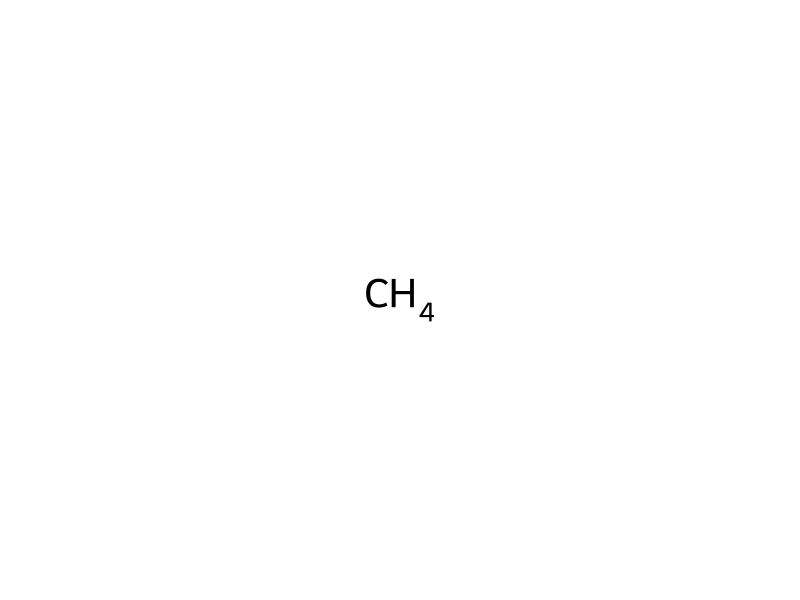
Methane → 1,1,1,3,3,3-Hexafluoro-2-propanol
Reaction equation

C.[F:2][C:3]([F:11])([F:10])[C:4]([C:6]([F:9])([F:8])[F:7])=[O:5]>[Pd]>[CH:4]([OH:5])([C:6]([F:9])([F:8])[F:7])[C:3]([F:11])([F:10])[F:2]Participants
Reactant 2

Product 1

Reagents, catalysts & solvents 1

Procedure
French Pat. No. 2,027,172 relates to a process for gas phase hydrogenation of perhaloketones over a palladium-based catalyst deposited on activated charcoal and particularly describes catalytic hydrogenation of hexafluoroacetone (CF3COCF3) to yield 1,1,1,3,3,3-hexafluoroisopropyl alcohol. The yield obtained (75%) and the difficulty of handling the starting material (b.p.: -27.4° C./760 torr) make the process uneconomical. French Pat. No. 2,479,803 carries out a gas phase catalytic hydrogenation of hexafluoroacetone to 1,1,1,3,3,3-hexafluoroisopropanol over a nickel-based catalyst. The catalyst life is not rated for a continuous operation time longer than 20 hours and, above all, this process requires the use of a pure starting material, which is difficult to obtain in the case of hexafluoroacetone. French Pat. No. 1,361,260 carries out the gas phase catalytic hydrogenation of hexafluoroacetone over a catalyst based on copper chromite. The yields of 1,1,1,3,3,3-hexafluoroisopropanol are mediocre (approximately 40%) for a partial conversion (83%) of the ketone used. This entails difficult and costly recycling.
Sources & evidence
- ORD record
- ord-5beb760d57d34c4d81b44b6f448e180f
- Source dataset
- uspto-grants-1987_03
- Patent number
- US04647706
Reaction notes
Loading…