4-Bromobiphenyl → 10-(Biphenyl-4-yl)-9,10-dihydroacridine
Reaction equation

[CH:1]1[C:14]2[CH2:13][C:12]3[C:7](=[CH:8][CH:9]=[CH:10][CH:11]=3)[NH:6][C:5]=2[CH:4]=[CH:3][CH:2]=1.Br[C:16]1[CH:21]=[CH:20][C:19]([C:22]2[CH:27]=[CH:26][CH:25]=[CH:24][CH:23]=2)=[CH:18][CH:17]=1>C1(C)C=CC=CC=1.C1C=CC(/C=C/C(/C=C/C2C=CC=CC=2)=O)=CC=1.C1C=CC(/C=C/C(/C=C/C2C=CC=CC=2)=O)=CC=1.C1C=CC(/C=C/C(/C=C/C2C=CC=CC=2)=O)=CC=1.[Pd].[Pd].P(C(C)(C)C)(C(C)(C)C)C(C)(C)C>[C:19]1([C:22]2[CH:23]=[CH:24][CH:25]=[CH:26][CH:27]=2)[CH:20]=[CH:21][C:16]([N:6]2[C:7]3[C:12](=[CH:11][CH:10]=[CH:9][CH:8]=3)[CH2:13][C:14]3[CH:1]=[CH:2][CH:3]=[CH:4][C:5]2=3)=[CH:17][CH:18]=1Participants




Procedure
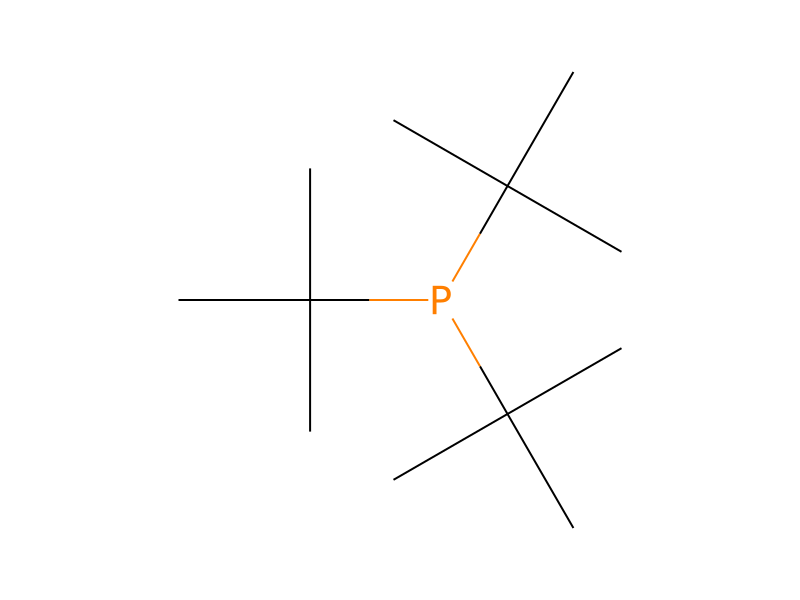
The obtained 9,10-dihydroacridine (11.8 g, 65.2 mmol) and 4-bromobiphenyl (18.2 g, 78.2 mmol) were dissolved in toluene (500 mL). Then, Pd2(dba)3 (1.4 g, 1.3 mmol) was added thereto under a nitrogen atmosphere. Then, NaOBut (9.4 g, 97.8 mmol) was added thereto, and (t-Bu)3P (1.6 ml, 2.6 mmol) was introduced to the resultant solution. The resultant mixture was reflux-stirred for 5 hours. The completion of the reaction was identified by a TLC. After the reaction was completed, the mixture was cooled to room temperature. The resultant solution was poured onto a thin silica pad so as to perform a short chromatography, and then was washed with MC. The filtrate was evaporated under a reduced pressure to remove the solvent. The residue was then purified by silica gel column chromatography (methylene chloride/n-hexane (1/10)) to obtain 10-(biphenyl-4-yl)-9,10-dihydroacridine compound (pale yellow solid, 15.3 g, yield 70%).
Workup
- additionThen, NaOBut (9.4 g, 97.8 mmol) was added
- washwas washed with MC
- customThe filtrate was evaporated under a reduced pressure
- customto remove the solvent
- customThe residue was then purified by silica gel column chromatography (methylene chloride/n-hexane (1/10))
Sources & evidence
- ORD record
- ord-cb8ae7d0ebf94ea1863ca1397fcdf327
- Source dataset
- uspto-grants-2013_12
- Patent number
- US08597802B2
Reaction notes
Loading…