Carbon Dioxide → Ethyl [(chlorocarbonyl)sulfanyl]acetate
Reaction equation

C(=O)=O.[CH2:4]([O:6][C:7](=[O:10])[CH2:8][SH:9])[CH3:5].[Cl:11][C:12](Cl)([O:14]C(=O)OC(Cl)(Cl)Cl)Cl.[OH-].[Na+]>[Cl-].C([N+](CCCC)(CCCC)CCCC)CCC>[CH2:4]([O:6][C:7](=[O:10])[CH2:8][S:9][C:12]([Cl:11])=[O:14])[CH3:5]Participants
6
Reactant 4

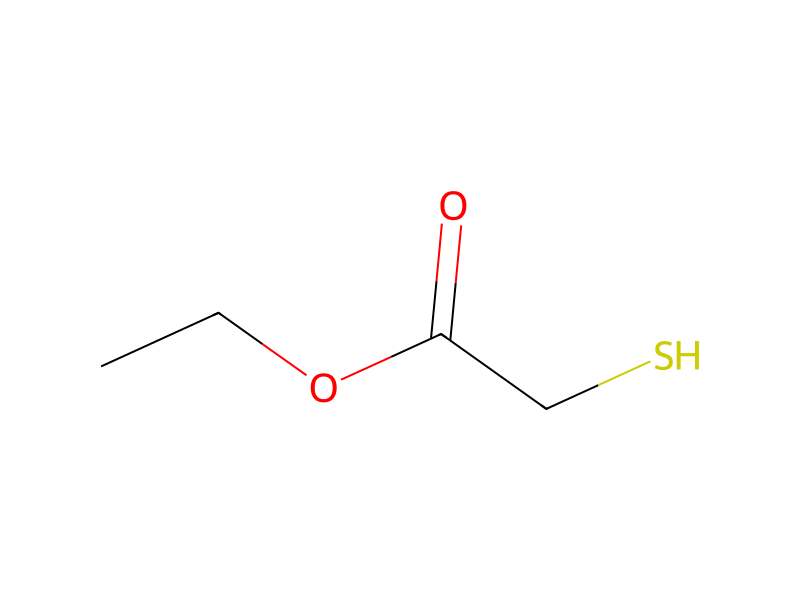


Product 1

Reagents, catalysts & solvents 1
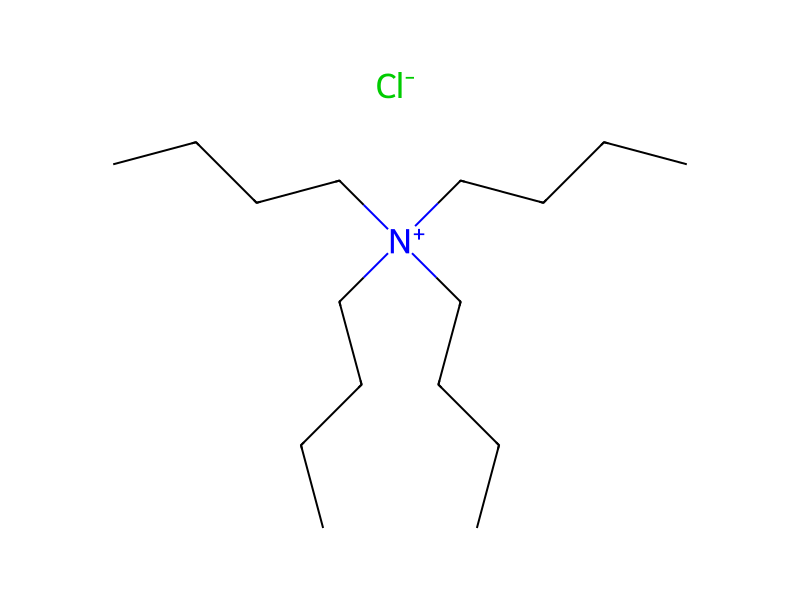
Conditions
- Temperature
- 80 °C
Procedure
A flask equipped with a refrigerant cooled with dry ice was charged with thioglycolic acid ethyl ester (1.202 g, 10.0 mmol) and triphosgene (2.000 g, 6.7 mmol). A catalytical amount of tetrabutylammonium chloride was added and the mixture was heated to a temperature of 80° C. for fifteen hours. The exhaust gases were treated with 4N sodium hydroxide aqueous solution. The resulting light brown liquid was flushed with a stream of nitrogen, then distilled under vacuum (110° C./4 mbar) to yield the desired compound as a colorless oil. 1H-NMR (400 MHz, CDCl3, reference TMS); δ (ppm): 4.22 (q, 2H), 3.76 (s, 2H), 1.30 (t, 3H). 13C-NMR (100 MHz, CDCl3, reference TMS); δ (ppm): 166.63, 165.05, 62.44, 35.43, 14.02.
Workup
- customA flask equipped with
- customThe resulting light brown liquid was flushed with a stream of nitrogen
- distillationdistilled under vacuum (110° C./4 mbar)
Sources & evidence
- ORD record
- ord-2096c73ea94d4b2cbe8a4805096a0093
- Source dataset
- uspto-grants-2013_12
- Patent number
- US08598078B2
Reaction notes
Loading…