Phosphorus trichloride → 2-Chloro-4-nitropyridine
Reaction equation

P(Cl)(Cl)Cl.[Cl:5][C:6]1[CH:11]=[C:10]([N+:12]([O-:14])=[O:13])[CH:9]=[CH:8][N+:7]=1[O-].C(=O)(O)[O-].[Na+]>C(Cl)(Cl)Cl>[Cl:5][C:6]1[CH:11]=[C:10]([N+:12]([O-:14])=[O:13])[CH:9]=[CH:8][N:7]=1Participants
5
Reactant 3
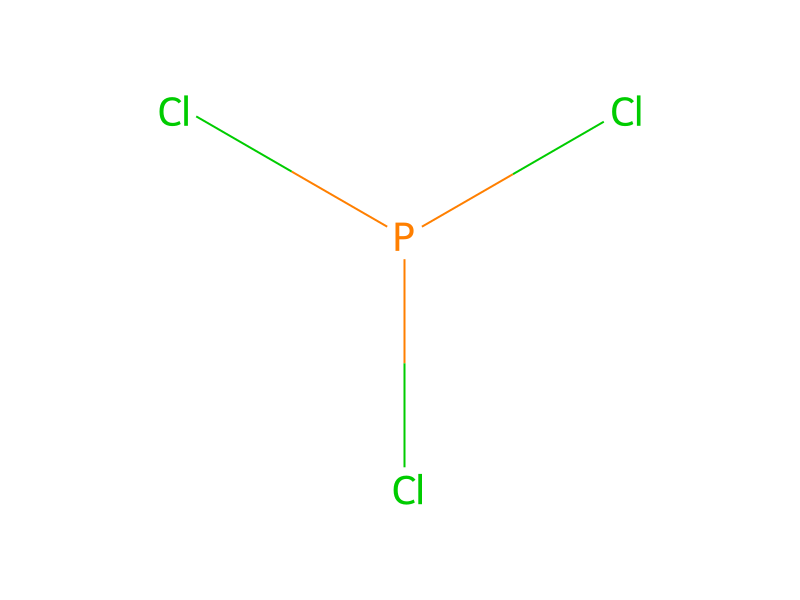


Product 1

Reagents, catalysts & solvents 1

Procedure
Phosphorus trichloride (4.2 mL, 48.7 mmol) was added to a solution of 2-chloro-4-nitro-pyridine-1-oxide (1.70 g, 9.74 mmol) in dry chloroform (25 mL) at r.t. The reaction mixture was then heated to reflux and maintained at this temperature overnight. The reaction was cooled to r.t. then poured onto ice, basified to between pH 7-8 with saturated aq. sodium bicarbonate solution and extracted with chloroform (×2). The combined organic phase was washed with water and brine, dried over sodium sulfate and concentrated. Drying under high vacuum afforded 2-chloro-4-nitro-pyridine (1.2 g, 78%) as a solid.
Workup
- temperatureThe reaction mixture was then heated
- temperatureto reflux
- temperaturemaintained at this temperature overnight
- additionthen poured onto ice
- extractionextracted with chloroform (×2)
- washThe combined organic phase was washed with water and brine
- dry with materialdried over sodium sulfate
- concentrationconcentrated
- customDrying under high vacuum
Sources & evidence
- ORD record
- ord-62d82b2205c642d1afaa2e799e09ec86
- Source dataset
- uspto-grants-2013_12
- Patent number
- US08604029B2
Reaction notes
Loading…