Aniline → 3-nitro-N-phenylpyridin-2-amine
Reaction equation

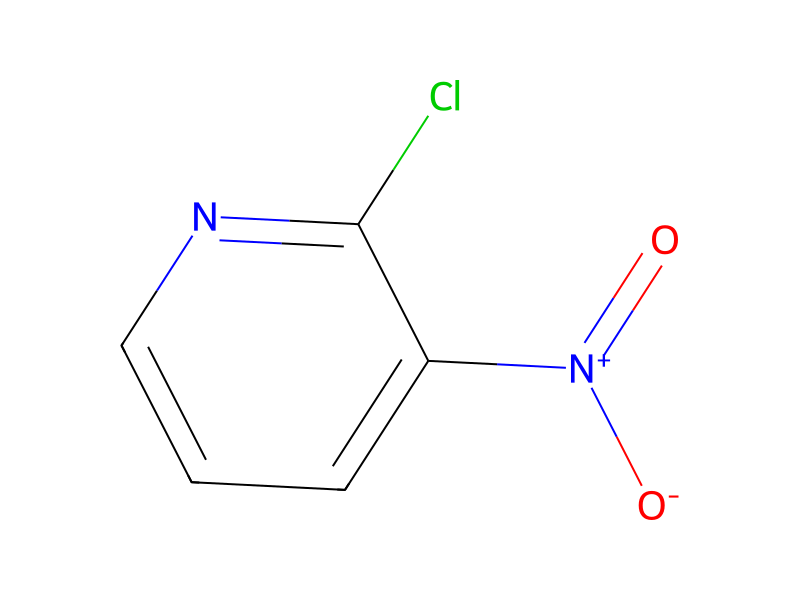
Cl[C:2]1[C:7]([N+:8]([O-:10])=[O:9])=[CH:6][CH:5]=[CH:4][N:3]=1.[NH2:11][C:12]1[CH:17]=[CH:16][CH:15]=[CH:14][CH:13]=1.C(N(C(C)C)CC)(C)C>C1COCC1>[N+:8]([C:7]1[C:2]([NH:11][C:12]2[CH:17]=[CH:16][CH:15]=[CH:14][CH:13]=2)=[N:3][CH:4]=[CH:5][CH:6]=1)([O-:10])=[O:9]Participants
Reactant 3


Product 1

Reagents, catalysts & solvents 1

Procedure
2-chloro-3-nitropyridine (structure 1 as shown in Scheme 1) was dissolved in THF (10 mL/mmol) in a round bottom flask. Aniline (1.0 eq.) (structure 2 as shown in Scheme 1) and diisopropylethylamine (1.05 eq.) were added. The reaction mixture was heated to the appropriate temperature for 4 to 36 hours. After cooling to room temperature the solvent was removed under reduced pressure. The residue was dissolved in ethyl acetate (20 mL/mmol) and washed with water and brine (20 mL/mmol respectively). The organic phase was separated and dried over Na2SO4. After filtration the solvent was removed under reduced pressure. The crude product (red to brown solid) was solidified with hexane/ethyl acetate and collected by filtration. The product was carried on to the next step without further purification.
Workup
- temperatureThe reaction mixture was heated to the appropriate temperature for 4 to 36 hours
- customwas removed under reduced pressure
- dissolutionThe residue was dissolved in ethyl acetate (20 mL/mmol)
- washwashed with water and brine (20 mL/mmol respectively)
- customThe organic phase was separated
- dry with materialdried over Na2SO4
- filtrationAfter filtration the solvent
- customwas removed under reduced pressure
- filtrationcollected by filtration
- customThe product was carried on to the next step without further purification
Sources & evidence
- ORD record
- ord-5b31beea556a48189d1c95c1d90bf98a
- Source dataset
- uspto-grants-2013_12
- Patent number
- US08609688B2
Reaction notes
Loading…