Morpholine → 4-(6-Nitropyridin-3-yl)morpholine
Reaction equation

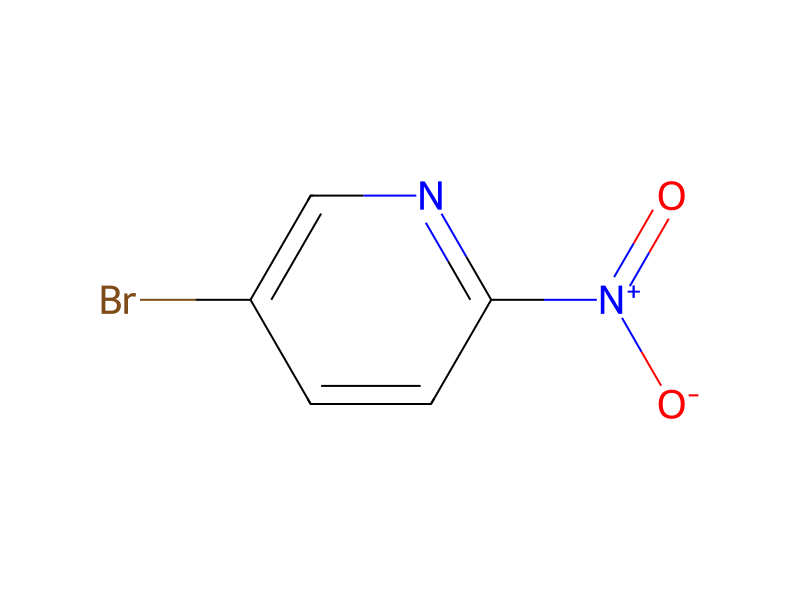
Br[C:2]1[CH:3]=[CH:4][C:5]([N+:8]([O-:10])=[O:9])=[N:6][CH:7]=1.C([O-])([O-])=O.[K+].[K+].[NH:17]1[CH2:22][CH2:21][O:20][CH2:19][CH2:18]1>[I-].C([N+](CCCC)(CCCC)CCCC)CCC.CS(C)=O.C(OCC)(=O)C>[N+:8]([C:5]1[N:6]=[CH:7][C:2]([N:17]2[CH2:22][CH2:21][O:20][CH2:19][CH2:18]2)=[CH:3][CH:4]=1)([O-:10])=[O:9]Participants
7






Conditions
- Temperature
- 80 °C
Procedure
A mixture of 5-bromo-2-nitro-pyridine (5 g, 24.75 mmol), tetrabutyl ammonium iodide (0.46 g, 1.24 mmol), K2CO3 (3.76 g, 27.22 mmol) and morpholine (2.34 g, 27.22 mmol) in DMSO (50 mL) is stirred at 80° C. in a stem tube for 20 hours. The reaction mixture is diluted with ethyl acetate and filtered. The organic solution is washed with water, dried over MgSO4 and concentrated in vacuo. The residue is triturated with dichloromethane and hexane to afford the title compound as a solid (2.39 g, 46%).
Workup
- filtrationfiltered
- washThe organic solution is washed with water
- dry with materialdried over MgSO4
- concentrationconcentrated in vacuo
- customThe residue is triturated with dichloromethane and hexane
Sources & evidence
- ORD record
- ord-8a953f44ab9a43dfa427e1c31f197fb8
- Source dataset
- uspto-grants-2012_05
- Patent number
- US08173656B2
Reaction notes
Loading…