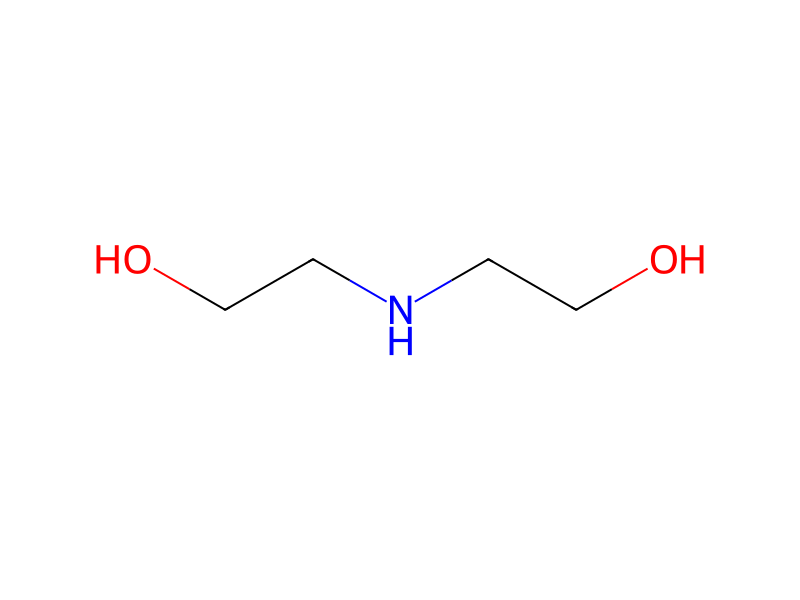
Diethanolamine → (1R)-1-(2-bromo-3-methylphenyl)ethanol
Reaction equation

B(Cl)([C@@H]1[C@@H](C)[C@H]2C(C)(C)[C@H](C2)C1)[C@@H]1[C@@H](C)[C@H]2C(C)(C)[C@H](C2)C1.[Br:23][C:24]1[C:29]([CH3:30])=[CH:28][CH:27]=[CH:26][C:25]=1[C:31](=[O:33])[CH3:32].N(CCO)CCO>O1CCCC1>[Br:23][C:24]1[C:29]([CH3:30])=[CH:28][CH:27]=[CH:26][C:25]=1[C@H:31]([OH:33])[CH3:32]Participants



Conditions
- Temperature
- -20 °C
Procedure
(+)-B-chlorodiisopinocampheylborane (8.46 g, 26.4 mmol) was dissolved in tetrahydrofuran (150 mL), cooled to −20° C., slowly added dropwise with a solution of 1-(2-bromo-3-methylphenyl)ethanone (4.30 g, 20.3 mmol) described in US 2007/167506 in tetrahydrofuran (50 mL), and stirred for 18 hours. The reaction solution was added with diethanolamine (6.38 g, 60.8 mmol), cooled to room temperature, and stirred at room temperature for 3 hours. The reaction solution was concentrated under reduced pressure and added with n-hexane (100 mL). The precipitated solids were filtered off and the solvent was distilled off under reduced pressure. The residue was purified by silica gel column chromatography (n-hexane/ethyl acetate=4/1) to give the title compound as a white solid (4.30 g, yield 99%, 95.6% ee).
Workup
- temperaturecooled to room temperature
- stirringstirred at room temperature for 3 hours
- concentrationThe reaction solution was concentrated under reduced pressure
- additionadded with n-hexane (100 mL)
- filtrationThe precipitated solids were filtered off
- distillationthe solvent was distilled off under reduced pressure
- customThe residue was purified by silica gel column chromatography (n-hexane/ethyl acetate=4/1)
Sources & evidence
- ORD record
- ord-2deb15fdc08444289e13499f57b05116
- Source dataset
- uspto-grants-2012_05
- Patent number
- US08183272B2
Reaction notes
Loading…