Water → 3,3-Dimethyl-1,2,3,4-tetrahydroquinoxalin-2-one
Reaction equation

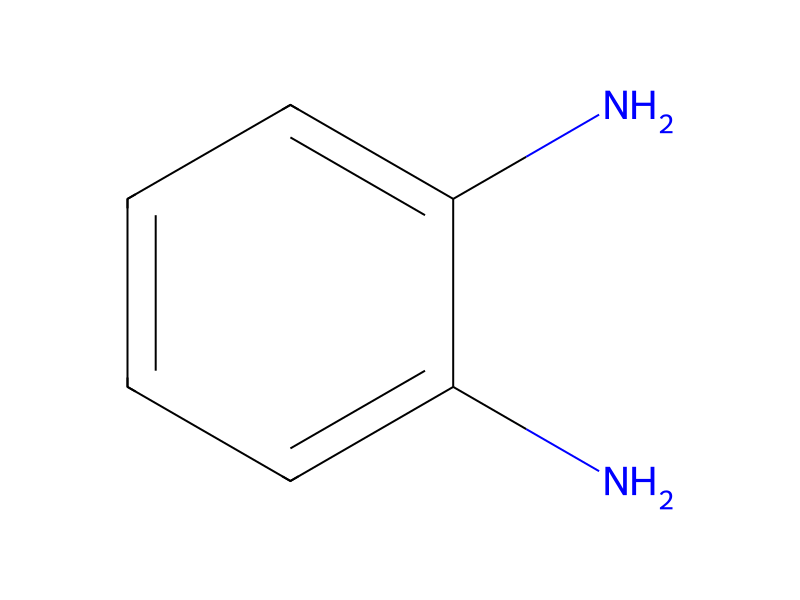
[C:1]1([NH2:8])[CH:6]=[CH:5][CH:4]=[CH:3][C:2]=1[NH2:7].C(N(CC)C(C)C)(C)C.Br[C:19]([CH3:26])([CH3:25])[C:20](OCC)=[O:21].O>CN(C)C=O>[CH3:25][C:19]1([CH3:26])[NH:8][C:1]2[C:2](=[CH:3][CH:4]=[CH:5][CH:6]=2)[NH:7][C:20]1=[O:21]Participants





Conditions
- Temperature
- 110 °C
Procedure
To a solution of 1,2-phenylenediamine (16.96 g) in N,N-dimethylformamide (80 mL) were added successively N,N-diisopropylethylamine (36.4 mL) and ethyl α-bromoisobutyrate (39.8 g), and the mixture was heated at 110° C. for 3 days. After cooling, to the reaction mixture was added cold water and the mixture was extracted with ethyl acetate. The aqueous layer was extracted with ethyl acetate, and the combined organic layer was washed successively with an aqueous 10% HCl solution, water, an aqueous saturated sodium hydrogencarbonate solution and brine, dried over sodium sulfate and concentrated in vacuo. The resultant residue was recrystallized from dichloromethane-n-hexane to give 3,3-dimethyl-3,4-dihydroquinoxalin-2(1H)-one (15.90 g) as pale yellow crystals.
Workup
- temperatureAfter cooling, to the reaction mixture
- extractionthe mixture was extracted with ethyl acetate
- extractionThe aqueous layer was extracted with ethyl acetate
- washthe combined organic layer was washed successively with an aqueous 10% HCl solution, water
- dry with materialan aqueous saturated sodium hydrogencarbonate solution and brine, dried over sodium sulfate
- concentrationconcentrated in vacuo
- customThe resultant residue was recrystallized from dichloromethane-n-hexane
Sources & evidence
- ORD record
- ord-e87063151d3243cb8cc37126d891551a
- Source dataset
- uspto-grants-2012_05
- Patent number
- US08188073B2
Reaction notes
Loading…