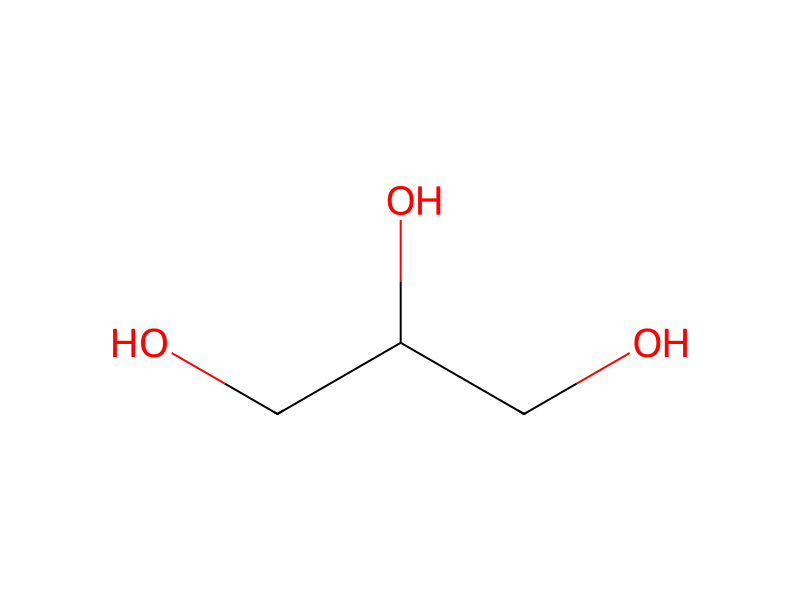
Glycerol → 8-Methyl-7-nitroquinoline
Reaction equation

[CH3:1][C:2]1[C:8]([N+:9]([O-:11])=[O:10])=[CH:7][CH:6]=[CH:5][C:3]=1[NH2:4].O.[As+3]=O.S(=O)(=O)(O)O.[OH-].[NH4+].O[CH2:23][CH:24]([CH2:26]O)O>O.C(OCC)(=O)C>[CH3:1][C:2]1[C:8]([N+:9]([O-:11])=[O:10])=[CH:7][CH:6]=[C:5]2[C:3]=1[N:4]=[CH:26][CH:24]=[CH:23]2Participants







Conditions
- Temperature
- 150 °C
Procedure
To a suspension of 2 g of 2-methyl-3-nitroaniline and 1.02 g of arsenic(v) oxide hydrate are added 2.88 mL of glycerin followed by 1.09 mL of concentrated sulfuric acid. The resulting black slurry is stirred at about 150° C. for 4 hours. The black oil is cooled to room temperature, diluted with water and poured into a mixture of 25% aqueous ammonium hydroxide and ethyl acetate. The organic layer is washed with water followed by brine. The aqueous layers are extracted with ethyl acetate; the combined organic layers are dried over magnesium sulfate, filtered and rotary evaporated. The residue is purified by flash column chromatography on silica gel, eluting with 50% ethyl acetate/hexanes followed by recrystallization from hexanes/methylene chloride to provide 1.45 g of 8-methyl-7-nitroquinoline as a pale brown solid.
Workup
- temperatureThe black oil is cooled to room temperature
- washThe organic layer is washed with water
- extractionThe aqueous layers are extracted with ethyl acetate
- dry with materialthe combined organic layers are dried over magnesium sulfate
- filtrationfiltered
- customThe residue is purified by flash column chromatography on silica gel
- washeluting with 50% ethyl acetate/hexanes
- customfollowed by recrystallization from hexanes/methylene chloride
Sources & evidence
- ORD record
- ord-86882a9f12fe4fe5a52672b630844f74
- Source dataset
- uspto-grants-2002_05
- Patent number
- US06391878B2
Reaction notes
Loading…