2,2,2-Trifluoroethylamine hydrochloride → HCID 18519913, compound
Reaction equation

CO[CH:3]1[CH2:7][CH2:6][CH:5](OC)[O:4]1.Cl.[F:11][C:12]([F:16])([F:15])[CH2:13][NH2:14].[CH2:17]([C:24](O)=O)[C:18](CC(O)=O)=O.C([O-])(=O)C.[Na+]>Cl.O.C(=O)([O-])[O-].[K+].[K+]>[F:11][C:12]([F:16])([F:15])[CH2:13][N:14]1[CH:6]2[CH2:5][CH2:24][CH:17]1[CH2:18][C:3](=[O:4])[CH2:7]2Participants
8
Reactant 4


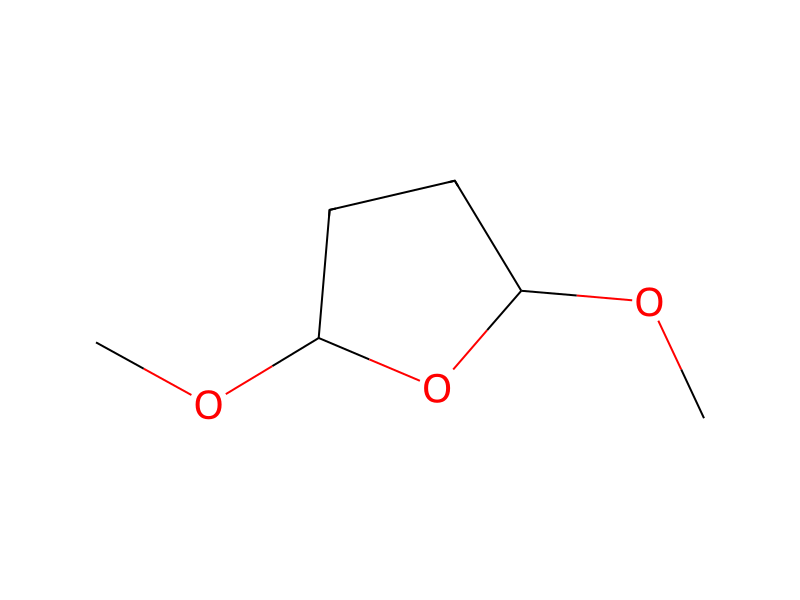

Product 1

Reagents, catalysts & solvents 3



Procedure
A few drops of dilute hydrochloric acid were added to a solution of 2,5-dimethoxytetrahydrofuran (16.5 g) in water (70 ml). After stirring at room temperature for 30 minutes 2,2,2-trifluoroethylamine hydrochloride (16.9 g), 1,3-acetonedicarboxylic acid (18.3 g) and sodium acetate (10.0 g) were added and the mixture stirred at room temperature for 2 days. The mixture was diluted to 500 ml with water, saturated with potassium carbonate and extracted with ethyl acetate (×2). The combined organic extracts were washed with aqueous potassium carbonate, dried (MgSO4) and evaporated under reduced pressure. Distillation (90° C.; 0.1 mmHg) gave 8-(2,2,2-trifluoroethyl)-8-azabicyclo[3.2.1]octan-3-one (8.7 g).
Workup
- additionwere added
- extractionextracted with ethyl acetate (×2)
- washThe combined organic extracts were washed with aqueous potassium carbonate
- dry with materialdried (MgSO4)
- customevaporated under reduced pressure
- distillationDistillation (90° C.; 0.1 mmHg)
Sources & evidence
- ORD record
- ord-661d6ecaa1414c4aa2091257427a6c0c
- Source dataset
- uspto-grants-2002_05
- Patent number
- US06391883B1
Reaction notes
Loading…