Acetic Acid → 1-Phenyl-3-acetoxybutane
Reaction equation

[C:1]1([CH2:7][CH2:8][CH:9]([OH:11])[CH3:10])[CH:6]=[CH:5][CH:4]=[CH:3][CH:2]=1.C1(C)C=CC=CC=1.[C:19](O)(=[O:21])[CH3:20].Cl>CN(C)C1C=CN=CC=1.N1C=CC=CC=1>[C:19]([O:11][CH:9]([CH2:8][CH2:7][C:1]1[CH:6]=[CH:5][CH:4]=[CH:3][CH:2]=1)[CH3:10])(=[O:21])[CH3:20]Participants
Reactant 4



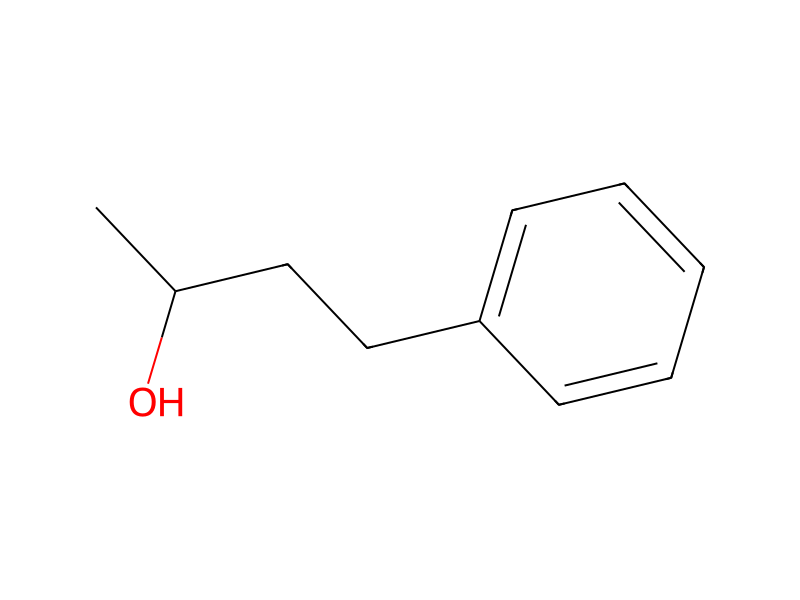
Product 1

Reagents, catalysts & solvents 2


Procedure
Into a four-necked flask provided with a thermometer and a stirrer, 150 g (1 mol) of 4-phenyl-2-butanol (XXX-35), 500 ml of toluene and 200 ml of pyridine were charged. 122.4 g (1.2 mol) of anhydrous acetic acid and 1 g of 4-dimethylaminopyridine were further added thereto to react them for 4 hours, while temperature being maintained at 40°-50° C. After completion of the reaction, the reaction mixture was poured into 500 ml of 4N hydrochloric acid solution, extracted and fractionated, and then an organic layer was washed with 1N hydrochloric acid, water, 5% sodium bicarbonate solution and water in the order. The thus-obtained organic layer was concentrated under a reduced pressure to obtain 189 g of 2-acetoxy-4-phenylbutane (XXIX-35) with yield of 98.5%.
Workup
- additionwere charged
- customto react them for 4 hours
- temperaturewhile temperature being maintained at 40°-50° C
- customAfter completion of the reaction
- extractionextracted
- washan organic layer was washed with 1N hydrochloric acid, water, 5% sodium bicarbonate solution and water in the order
- concentrationThe thus-obtained organic layer was concentrated under a reduced pressure
Sources & evidence
- ORD record
- ord-c8c37081e6e1451cb431d8c9170b5a46
- Source dataset
- uspto-grants-1997_12
- Patent number
- US05693251
Reaction notes
Loading…