Sodium hydride → Ethyl 2-(4-nitro-1H-benzimidazol-1-yl)octanoate
Reaction equation

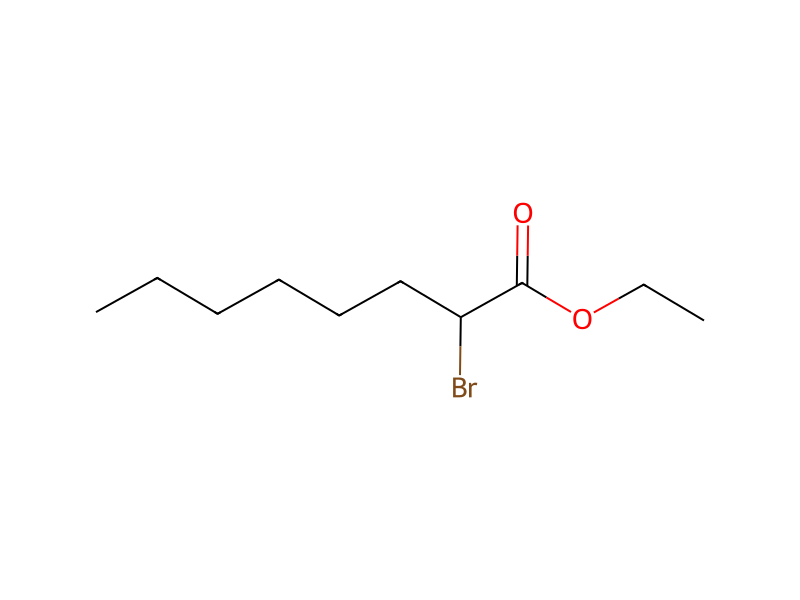
[N+:1]([C:4]1[C:12]2[NH:11][CH:10]=[N:9][C:8]=2[CH:7]=[CH:6][CH:5]=1)([O-:3])=[O:2].[H-].[Na+].Br[CH:16]([CH2:22][CH2:23][CH2:24][CH2:25][CH2:26][CH3:27])[C:17]([O:19][CH2:20][CH3:21])=[O:18]>CN(C=O)C>[N+:1]([C:4]1[C:12]2[N:11]=[CH:10][N:9]([CH:16]([CH2:22][CH2:23][CH2:24][CH2:25][CH2:26][CH3:27])[C:17]([O:19][CH2:20][CH3:21])=[O:18])[C:8]=2[CH:7]=[CH:6][CH:5]=1)([O-:3])=[O:2]Participants
5
Reactant 3


Product 1

Reagents, catalysts & solvents 1

Procedure
4-Nitrobenzimidazole (41.7 moles, 6.8 g) was dissolved in 200 ml DMF. Sodium hydride (47.5 moles, 1.9 g of 60% in mineral oil) was added portionwise. The reaction was stirred for 30 minutes. Ethyl 2-bromooctanoate was added. The reaction stirred at room temperature for 3 hours and concentrated. Ethyl acetate and water were added; and the layers separated. The organic layer was washed with brine, dried over sodium sulfate and concentrated. The intermediate was purified by HPLC over silica gel eluted with a gradient of 0-50% ethyl acetate in hexane. The reaction yielded 10.3 g of ethyl 2-(4-nitro-1H-benzimidazol-1-yl)octanoate. (MS)
Workup
- stirringThe reaction stirred at room temperature for 3 hours
- concentrationconcentrated
- additionEthyl acetate and water were added
- customand the layers separated
- washThe organic layer was washed with brine
- dry with materialdried over sodium sulfate
- concentrationconcentrated
- customThe intermediate was purified by HPLC over silica gel
- washeluted with a gradient of 0-50% ethyl acetate in hexane
Sources & evidence
- ORD record
- ord-9bd822178c864d109ee89194f52ec93a
- Source dataset
- uspto-grants-1997_12
- Patent number
- US05693633
Reaction notes
Loading…