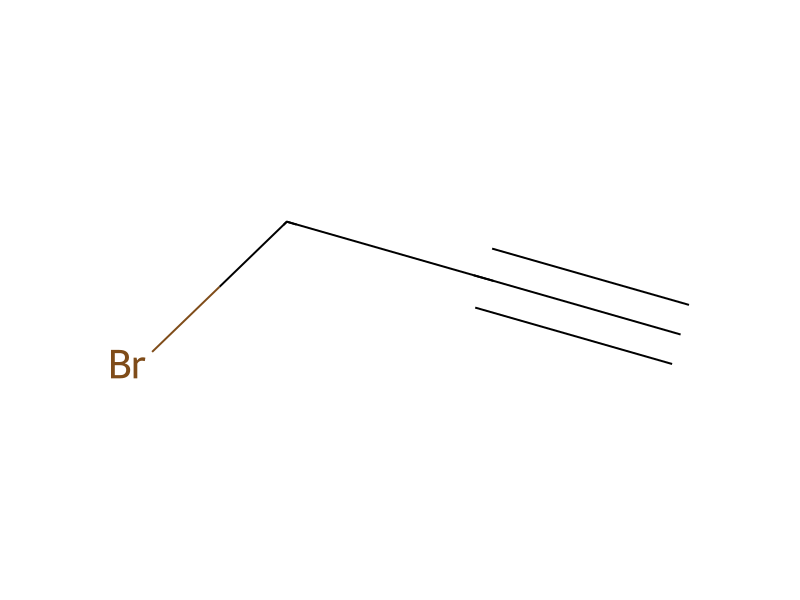
Propargyl bromide → HCID 21467243, compound
Reaction equation

[Br:1][C:2]1[C:7]([OH:8])=[CH:6][CH:5]=[CH:4][N:3]=1.[H-].[Na+].[CH2:11](Br)[C:12]#[CH:13]>C1COCC1>[Br:1][C:2]1[C:7]([O:8][CH2:13][C:12]#[CH:11])=[CH:6][CH:5]=[CH:4][N:3]=1Participants
5
Reactant 3
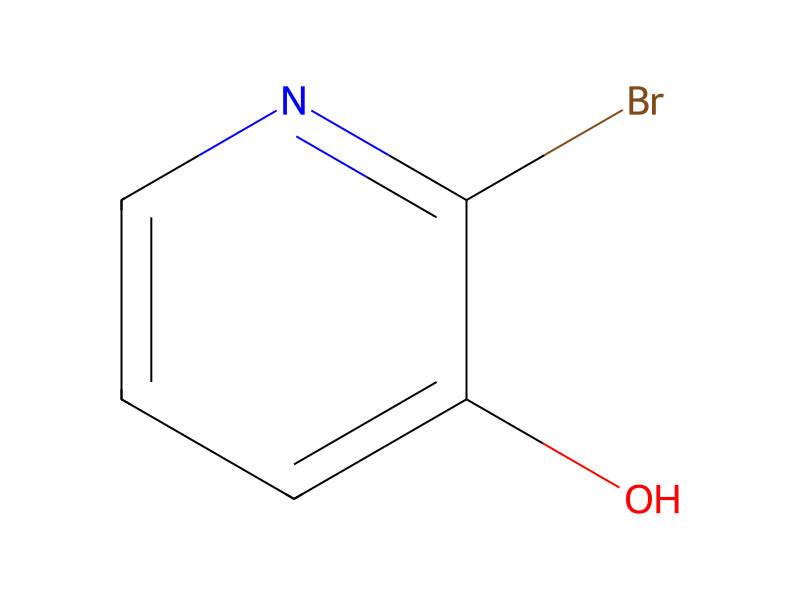

Product 1

Reagents, catalysts & solvents 1

Procedure
A solution of 2-bromo-3-hydroxypyridine (10 g) in dry THF (100 ml) was treated with 1 equivalent of sodium hydride (80% in oil) (1.72 g) and stirred at room temperature under nitrogen for 0.75 hours. Propargyl bromide (80% in toluene) (19.2 ml) was added and the mixture was heated under reflux for 88 hours. After cooling, the solvent was evaporated under reduced pressure and the residue partitioned between 5% aqueous NaOH and EtOAc. The organic layer was removed, dried (Na2SO4) and concentrated in vacuo to give a pale yellow gum. This was purified by column chromatography on silica using dichloromethane as eluant to give 2-bromo-3-propargyloxypyridine as an off white solid 6 g.
Workup
- temperaturethe mixture was heated
- temperatureunder reflux for 88 hours
- temperatureAfter cooling
- customthe solvent was evaporated under reduced pressure
- customthe residue partitioned between 5% aqueous NaOH and EtOAc
- customThe organic layer was removed
- dry with materialdried (Na2SO4)
- concentrationconcentrated in vacuo
- customto give a pale yellow gum
- customThis was purified by column chromatography on silica
Sources & evidence
- ORD record
- ord-5622e1bedb504dbb97a2850eef5ef5e6
- Source dataset
- uspto-grants-1997_12
- Patent number
- US05696129
Reaction notes
Loading…