Acetone Cyanohydrin → HCID 45277266, compound
Reaction equation

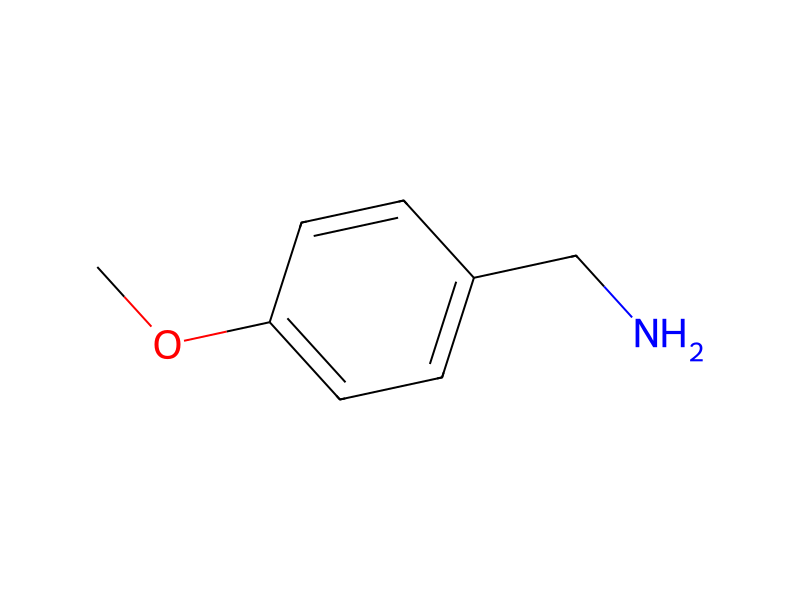
CS([CH:5]1[CH2:10][CH2:9][C:8](=O)[CH2:7][CH2:6]1)(=O)=O.[CH3:12][O:13][C:14]1[CH:21]=[CH:20][C:17]([CH2:18][NH2:19])=[CH:16][CH:15]=1.CC(C)(O)[C:24]#[N:25].C(N(CC)CC)C>CO>[CH3:12][O:13][C:14]1[CH:21]=[CH:20][C:17]([CH2:18][N:19]2[CH:8]3[CH2:9][CH2:10][C:5]2([C:24]#[N:25])[CH2:6][CH2:7]3)=[CH:16][CH:15]=1Participants
Reactant 4



Product 1

Reagents, catalysts & solvents 1

Conditions
- Temperature
- 100 °C
Procedure
This synthesis was performed according to scheme 2, with details as follows. In a dry, pressure resistant vessel of 20 ml, 1.25 g (6.5 mmole) 4-methanesulfonylcyclohexanone 9, 0.89 g (6.5 mmole) 4-methoxybenzylamine, 1.11 g (13 mmole) acetone cyanohydrine and 1.32 g (13 mmole) triethylamine were dissolved in 16 ml dry methanol. The vessel was closed and heated to 100° C. for 50 hours. Methanol was evaporated and the residue was redissolved in dichloromethane. The solution was washed with a saturated NaHCO3 solution and dried over MgSO4. After filtration of the solids, the volatile components were evaporated. 7-(4-methoxybenzyl)-7-azabicyclo[2.2.1]heptane-1-carbonitrile 6a was obtained as a brown oil in a 97% yield and characterised by proton (1H-NMR) and carbon (13C-NMR) nuclear magnetic resonance, and mass spectrum (MSES) as follows:
Workup
- customThe vessel was closed
- customMethanol was evaporated
- dissolutionthe residue was redissolved in dichloromethane
- washThe solution was washed with a saturated NaHCO3 solution
- dry with materialdried over MgSO4
- filtrationAfter filtration of the solids
- customthe volatile components were evaporated
Sources & evidence
- ORD record
- ord-69fbcc40a3db4270b4c7f3028bc811db
- Source dataset
- uspto-grants-2013_03
- Patent number
- US08389561B2
Reaction notes
Loading…