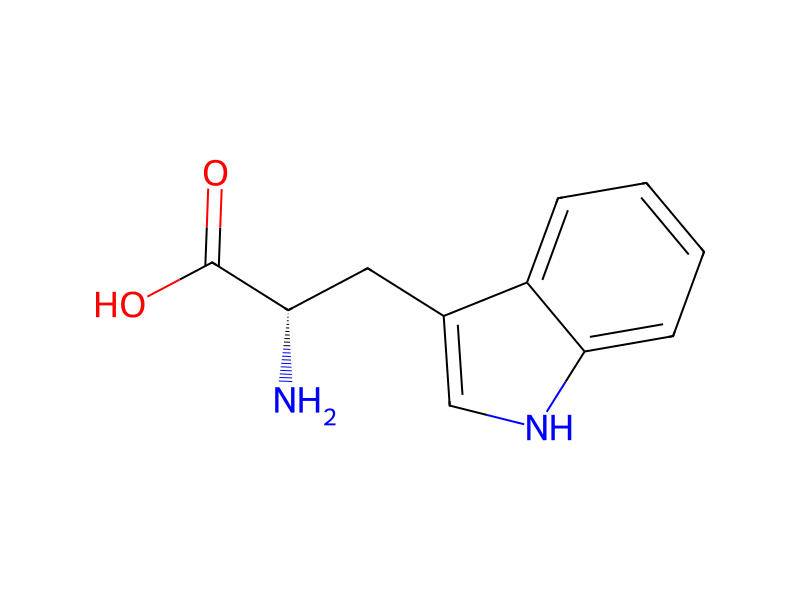
L-Tryptophan → Indole-3-pyruvic acid
Reaction equation

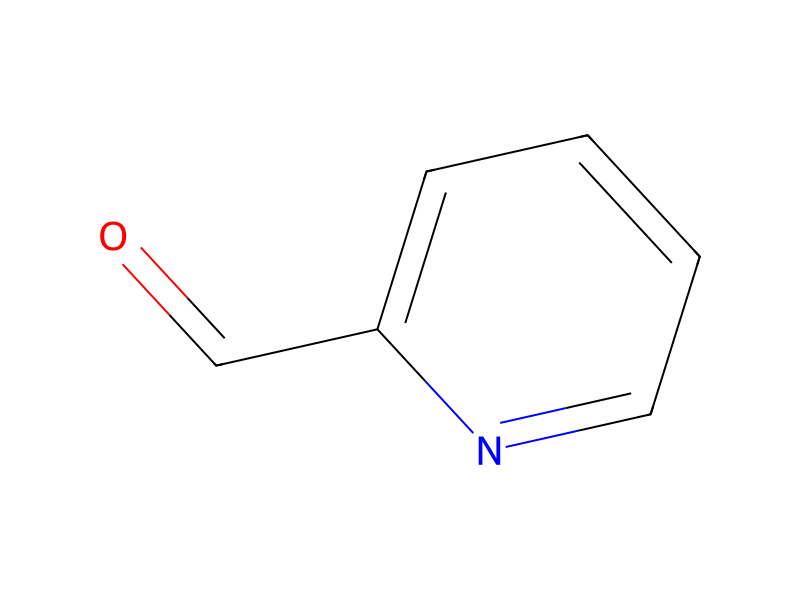
N[C@H:2]([C:13]([OH:15])=[O:14])[CH2:3][C:4]1[C:12]2[C:7](=[CH:8][CH:9]=[CH:10][CH:11]=2)[NH:6][CH:5]=1.N1C=CC=CC=1C=[O:23]>>[NH:6]1[C:7]2[C:12](=[CH:11][CH:10]=[CH:9][CH:8]=2)[C:4]([CH2:3][C:2](=[O:23])[C:13]([OH:15])=[O:14])=[CH:5]1Participants

Procedure
In a chemical method for producing 3-indole-pyruvic acid disclosed by Giovanna De Luca et al., 3-indole-pyruvic acid was produced with a yield of 50 to 62% by reacting tryptophan as a starting material with pyridine aldehyde in the presence of a base for dehydrating a proton acceptor (see JP Sho-62-501912 [Patent Document 1], International Publication 87/00169 Pamphlet [Patent Document 2]). In this method, the required base and pyridine aldehyde are expensive and the yield is low. As a result, production cost are very high. Politi Vincenzo et al. produced 3-indole-pyruvic acid with the yield of 64% by a condensation reaction using indole and ethyl-3-bromopyruvate ester oxime as raw materials followed by acid hydrolysis (see Europe Patent Application Publication No. 421946 [Patent Document 3]). This method, however, requires a purification step using silica gel, the yield is low, the raw materials are expensive and the industrial production cost is very high.
Sources & evidence
- ORD record
- ord-09226c27a8dd43e788e2bc4b951ebe27
- Source dataset
- uspto-grants-2013_03
- Patent number
- US08394940B2
Reaction notes
Loading…