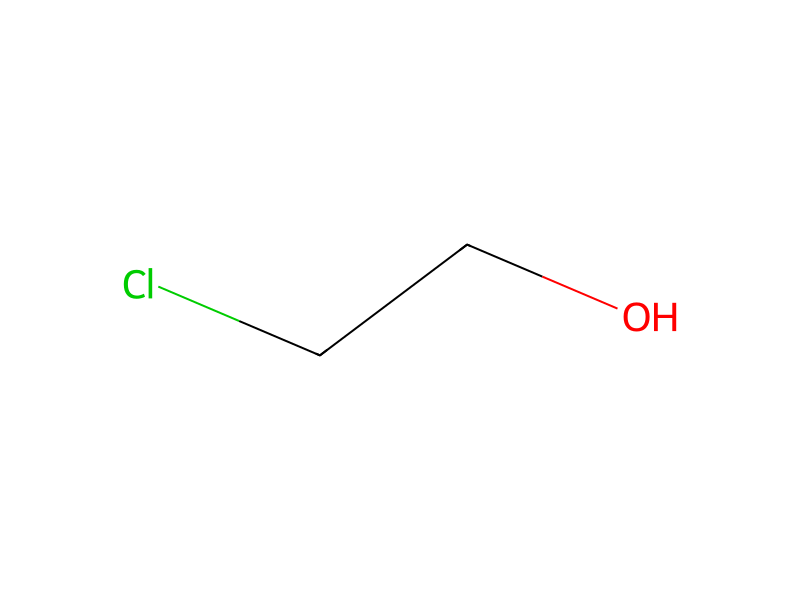
2-Chloroethanol → 4-Bromo-1-(2-chloroethyl)-1H-pyrazole
Reaction equation

[Br:1][C:2]1[CH:3]=[N:4][NH:5][CH:6]=1.[Cl:7][CH2:8][CH2:9]O.C1C=CC(P(C2C=CC=CC=2)C2C=CC=CC=2)=CC=1.CCOC(/N=N/C(OCC)=O)=O>C1COCC1>[Br:1][C:2]1[CH:3]=[N:4][N:5]([CH2:9][CH2:8][Cl:7])[CH:6]=1Participants
6
Reactant 4



Product 1

Reagents, catalysts & solvents 1

Procedure
To a solution of 4-bromo-1H-pyrazole (5 g, 34.02 mmol), 2-chloroethanol (2.7 mL, 40.82 mmol) and PPh3 (10.71 g, 40.82 mmol) and in THF (68 mL) at 0° C. was added DEAD (6.4 mL, 40.8 mmol). The mixture was allowed to warm-up to room temperature and stirred overnight. It was then concentrated under reduced pressure, the residue was treated with ether and the resultant suspension was filtered. The filtrate was collected and concentrated under reduced pressure to afford the title compound 75 which was used in the next step without further purification. MS (m/z). 209.0 (M+H).
Workup
- concentrationIt was then concentrated under reduced pressure
- additionthe residue was treated with ether
- filtrationthe resultant suspension was filtered
- customThe filtrate was collected
- concentrationconcentrated under reduced pressure
Sources & evidence
- ORD record
- ord-c9b55860f6cb4911b4114ad32a1ef24f
- Source dataset
- uspto-grants-2013_03
- Patent number
- US08404846B2
Reaction notes
Loading…