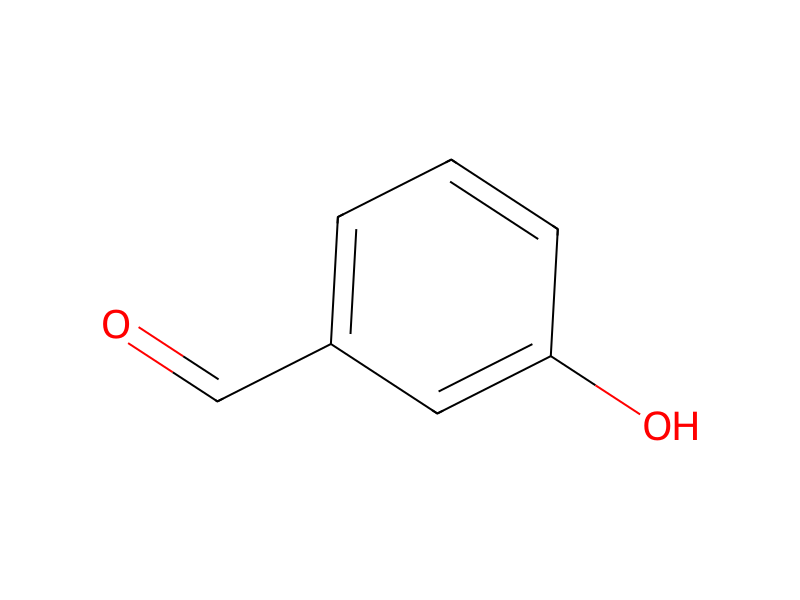
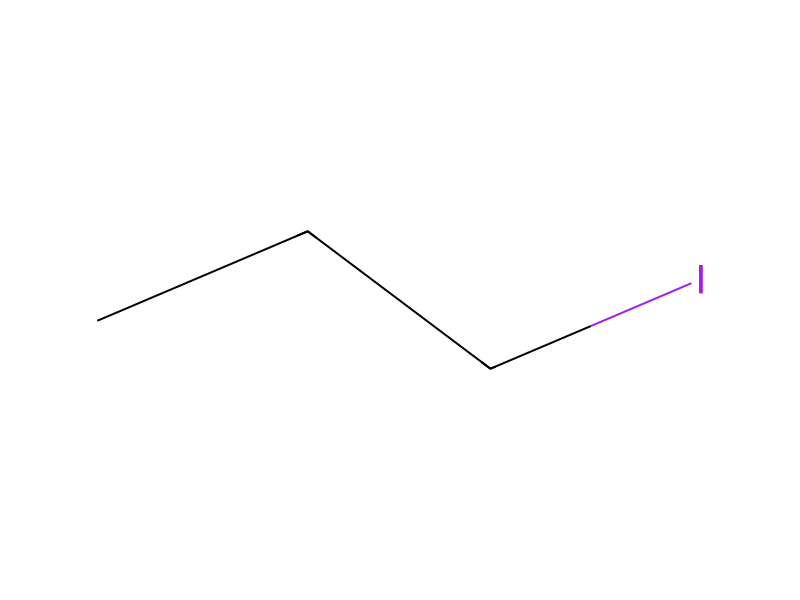
3-Hydroxybenzaldehyde → 3-Propoxybenzaldehyde
Reaction equation

[CH2:1]([O:4][C:5]1[CH:6]=[C:7](/[CH:11]=C/C(Cl)=O)[CH:8]=[CH:9][CH:10]=1)[CH2:2][CH3:3].[OH:16]C1C=C(C=CC=1)C=O.ICCC>>[CH2:1]([O:4][C:5]1[CH:6]=[C:7]([CH:8]=[CH:9][CH:10]=1)[CH:11]=[O:16])[CH2:2][CH3:3]Participants
4


Procedure
For example, (E)-3-(3'-propyloxyphenyl)-2-propenoyl chloride, used in Example 3 (i), can be prepared from commercially available 3-hydroxybenzaldehyde by reacting 3-hydroxybenzaldehyde with 1-iodopropane to give 3-propyloxy benzaldehyde. 3-Propyloxy benzaldehyde is then reacted with malonic acid to give the corresponding propenonic acid which is subsequently converted into (E)-3-(3'-propyloxyphenyl)-2-propenoyl chloride by reaction with oxalyl chloride.
Sources & evidence
- ORD record
- ord-a468ab6c65814f588d99029a71621843
- Source dataset
- uspto-grants-2000_09
- Patent number
- US06114549
Reaction notes
Loading…