4-Nitrobenzyl chloride → 4-Nitrobenzyltriphenylphosphonium chloride
Reaction equation

[C:1]1([P:7]([C:14]2[CH:19]=[CH:18][CH:17]=[CH:16][CH:15]=2)[C:8]2[CH:13]=[CH:12][CH:11]=[CH:10][CH:9]=2)[CH:6]=[CH:5][CH:4]=[CH:3][CH:2]=1.[N+:20]([C:23]1[CH:30]=[CH:29][C:26]([CH2:27][Cl:28])=[CH:25][CH:24]=1)([O-:22])=[O:21]>CC#N.CCOCC>[Cl-:28].[N+:20]([C:23]1[CH:30]=[CH:29][C:26]([CH2:27][P+:7]([C:1]2[CH:2]=[CH:3][CH:4]=[CH:5][CH:6]=2)([C:8]2[CH:13]=[CH:12][CH:11]=[CH:10][CH:9]=2)[C:14]2[CH:15]=[CH:16][CH:17]=[CH:18][CH:19]=2)=[CH:25][CH:24]=1)([O-:22])=[O:21]Participants
5
Reactant 2
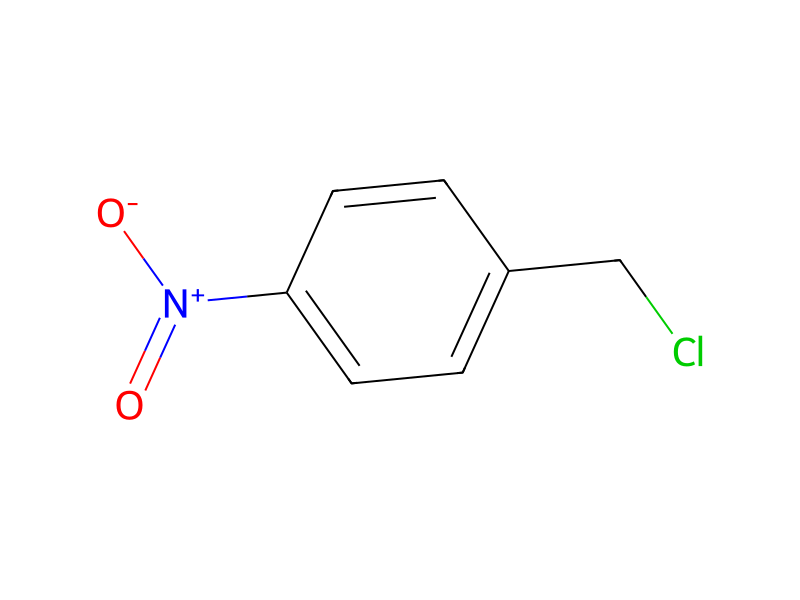

Product 1

Reagents, catalysts & solvents 2


Procedure
Triphenylphosphine (38.17 g, 0.146 mole) and 4-nitrobenzyl chloride (25g, 0.146 mole) were dissolved in CH3CN (100 mL) and heated at reflux for 2 hours, and then allowed to cool to room temperature. The reaction mixture was diluted with Et2O (300 mL), the white solid was filtered, washed with Et2O (200 mL), and dried in vacuo, giving 53.3 g (84%) of 4-nitrobenzyltriphenylphosphonium chloride as a single spot on TLC: (Rf =0.71, 4:1:1 butanol:acetic acid:water). 1H-NMR (d6 -DMSO): 5.40-5.50 (2H, d, CH2P, J=20 Hz); 7.20-7.40 (2H, dd, aromatic); 7.40-7.80 (12H, m, aromatic); 7.90-8.00 (3H, m, aromatic); 8.10-8.20 (2H, d, aromatic).
Workup
- temperatureheated
- temperatureat reflux for 2 hours
- filtrationthe white solid was filtered
- washwashed with Et2O (200 mL)
- customdried in vacuo
Sources & evidence
- ORD record
- ord-45958cecdee14b1a8e34abe8eb540042
- Source dataset
- uspto-grants-1998_07
- Patent number
- US05776718
Reaction notes
Loading…