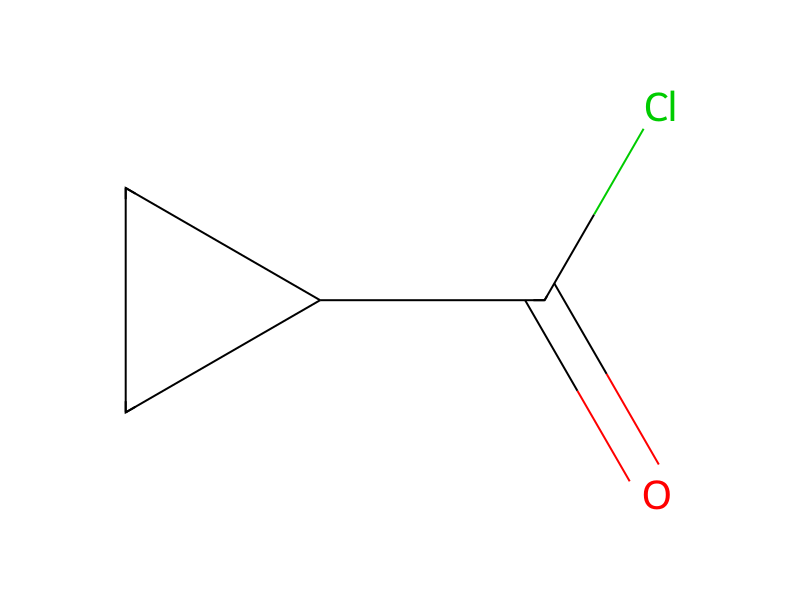
Cyclopropanecarbonyl chloride → HCID 23144340, compound
Reaction equation

[CH2:1]([C:4]([C:6]1[S:10][C:9]([NH2:11])=[N:8][C:7]=1[C:12]1[O:13][CH:14]=[CH:15][CH:16]=1)=[O:5])[CH2:2][CH3:3].[CH:17]1([C:20](Cl)=[O:21])[CH2:19][CH2:18]1.C(=O)([O-])O.[Na+]>N1C=CC=CC=1>[C:4]([C:6]1[S:10][C:9]([NH:11][C:20]([CH:17]2[CH2:19][CH2:18]2)=[O:21])=[N:8][C:7]=1[C:12]1[O:13][CH:14]=[CH:15][CH:16]=1)(=[O:5])[CH2:1][CH2:2][CH3:3]Participants
5
Reactant 3


Product 1

Reagents, catalysts & solvents 1

Procedure
Compound 384 (79.8 mg, 0.338 mmol) and N,N-dimethylaminopyridine (2.10 mg, 0.0172 mmol) were dissolved in pyridine (1.5 mL), and cyclopropanecarbonyl chloride (0.0521 mL, 0.570 mmol) was added thereto under ice-cooling, followed by stirring at room temperature for 5.5 hours. Aqueous saturated sodium hydrogencarbonate solution was added to the reaction mixture, followed by extraction with ethyl acetate. The organic layer was washed with a saturated aqueous solution of sodium chloride and dried over anhydrous magnesium sulfate, and then the solvent was distilled away under reduced pressure. The resulting residue was recrystallized from ethanol to afford the entitled Compound 385 (57.1 mg, 55%) as a white solid.
Workup
- temperatureunder ice-cooling
- extractionfollowed by extraction with ethyl acetate
- washThe organic layer was washed with a saturated aqueous solution of sodium chloride
- dry with materialdried over anhydrous magnesium sulfate
- distillationthe solvent was distilled away under reduced pressure
- customThe resulting residue was recrystallized from ethanol
Sources & evidence
- ORD record
- ord-193573fb2be24a51a85ed76bed62b7a5
- Source dataset
- uspto-grants-2013_04
- Patent number
- US08420827B2
Reaction notes
Loading…