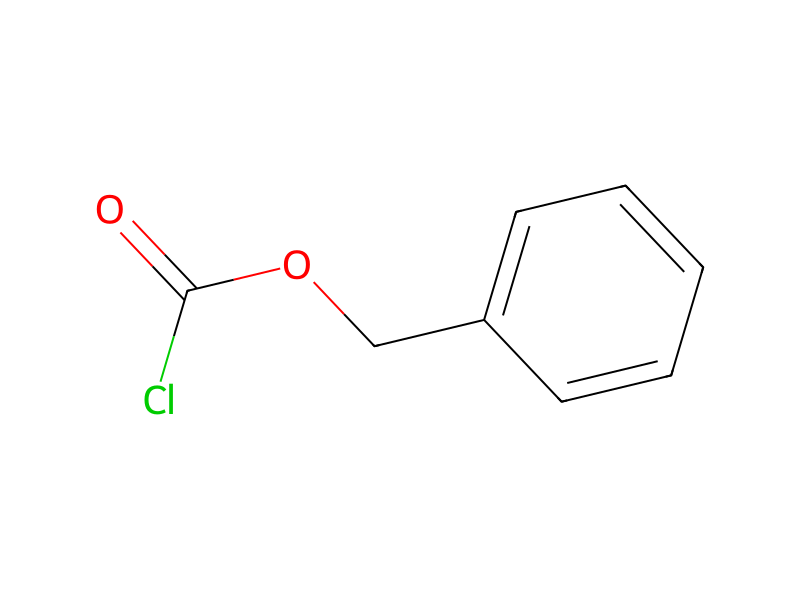
Benzyl chloroformate → Phenylmethyl 2-(4-bromophenyl)-1-pyrrolidinecarboxylate
Reaction equation

[Br:1][C:2]1[CH:7]=[CH:6][C:5]([CH:8]2[CH2:12][CH2:11][CH2:10][NH:9]2)=[CH:4][CH:3]=1.C(=O)([O-])[O-].[K+].[K+].Cl[C:20]([O:22][CH2:23][C:24]1[CH:29]=[CH:28][CH:27]=[CH:26][CH:25]=1)=[O:21]>O1CCOCC1.O>[Br:1][C:2]1[CH:3]=[CH:4][C:5]([CH:8]2[CH2:12][CH2:11][CH2:10][N:9]2[C:20]([O:22][CH2:23][C:24]2[CH:29]=[CH:28][CH:27]=[CH:26][CH:25]=2)=[O:21])=[CH:6][CH:7]=1Participants
6





Procedure
A solution of 2-(4-bromophenyl)pyrrolidine (2.26 g, 10 mmol) in dioxane (18 mL) and water (12 mL) was added potassium carbonate (5.52 g, 40 mol) and benzyl chloroformate (1.88 g, 11 mmol) at ambient temperature and stirred overnight. Then the mixture was partitioned between ethyl acetate and brine. The organic phase was concentrated in vacuo and the residue was purified by column chromatography (silica gel, EtOAc:hexane=1:10) to give the title compound (2.95 g, 82%) as a colorless oil. LC-MS (ESI) m/z: 360 (M+1)+.
Workup
- customThen the mixture was partitioned between ethyl acetate and brine
- concentrationThe organic phase was concentrated in vacuo
- customthe residue was purified by column chromatography (silica gel, EtOAc:hexane=1:10)
Sources & evidence
- ORD record
- ord-5d19ff338a6944b7ac6acfaa604712a9
- Source dataset
- uspto-grants-2013_04
- Patent number
- US08420650B2
Reaction notes
Loading…