Triethylamine → N-(3-chloro-4-fluorophenyl)-4-methyl-3-nitrobenzamide
Reaction equation

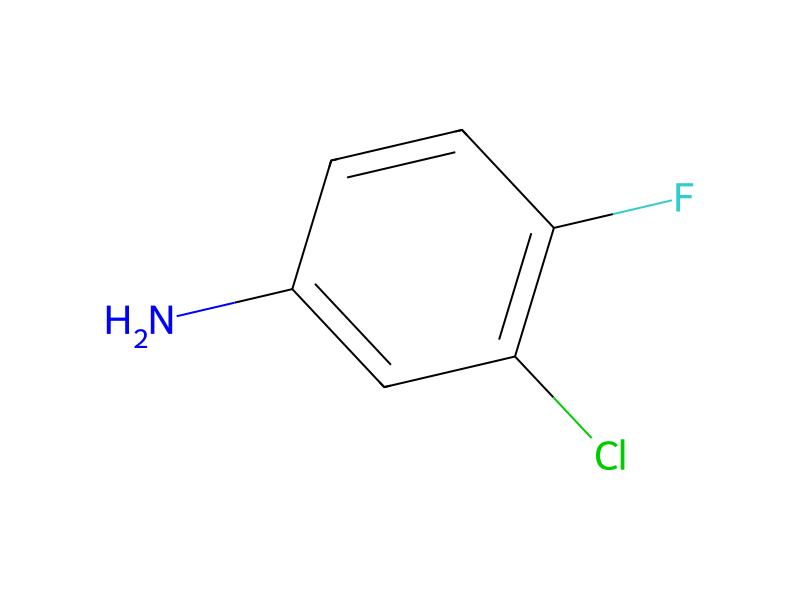
[CH3:1][C:2]1[CH:10]=[CH:9][C:5]([C:6](Cl)=[O:7])=[CH:4][C:3]=1[N+:11]([O-:13])=[O:12].C(N(CC)CC)C.[Cl:21][C:22]1[CH:23]=[C:24]([CH:26]=[CH:27][C:28]=1[F:29])[NH2:25].C(=O)([O-])[O-].[K+].[K+]>ClCCl>[Cl:21][C:22]1[CH:23]=[C:24]([NH:25][C:6](=[O:7])[C:5]2[CH:9]=[CH:10][C:2]([CH3:1])=[C:3]([N+:11]([O-:13])=[O:12])[CH:4]=2)[CH:26]=[CH:27][C:28]=1[F:29]Participants
6





Procedure
To a solution of 4-methyl-3-nitrobenzoyl chloride (2.0 g) in dichloromethane (20 ml), a solution of triethylamine (0.7 ml) and 3-chloro-4-fluoroaniline (0.7 g) in dichloromethane (15 ml) was added dropwise in an ice-bath with the temperature no more than 5° C. After addition, the reaction was carried out for 30 min in an ice-bath, and then at room temperature overnight. The completion of reaction was indicated by TLC. Then potassium carbonate solution (10%) was added to precipitate a solid. The mixture was left to stand, and filtered. The filter cake was washed with water, and dried to give a pale yellow powdered solid.
Workup
- additionAfter addition
- customat room temperature
- customovernight
- customThe completion of reaction
- customto precipitate a solid
- waitThe mixture was left
- filtrationfiltered
- washThe filter cake was washed with water
- customdried
- customto give a pale yellow powdered solid
Sources & evidence
- ORD record
- ord-7821722097a148edac8e0ae6e5b8fd59
- Source dataset
- uspto-grants-2013_04
- Patent number
- US08426446B2
Reaction notes
Loading…