Dichloromethane → Imidazo(1,2-a)pyridine
Reaction equation

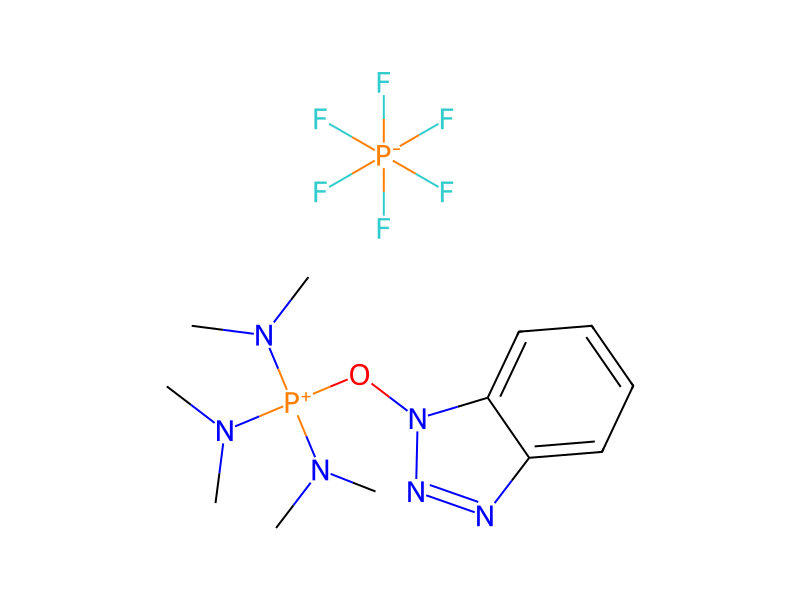
N[C:2]1[CH:7]=[CH:6][CH:5]=[C:4]([NH2:8])[N:3]=1.F[P-](F)(F)(F)(F)F.N1(O[P+](N(C)C)(N(C)C)N(C)C)[C:20]2C=CC=C[C:19]=2N=N1.C(Cl)Cl.CCN(C(C)C)C(C)C>CN(C=O)C>[N:8]1[CH:19]=[CH:20][N:3]2[CH:2]=[CH:7][CH:6]=[CH:5][C:4]=12Participants





Procedure
In Scheme 3, 2,6-diaminopyridine 15 is reacted with an alpha halocarbonyl 16 to give the imidazo[1,2-a]pyridine 17. The resulting amino group can be reacted with a carboxylic acid 18 using a coupling reagent such as chloro-1,3 dimethyl-4,5-dihydro-3H imidazolium chloride in the presence of a base such as TEA in a solvent such as ACN or alternatively by reacting amine 17 with an acid chloride 18 at elevated temperature in a solvent such as dichloroethane to give compound 19. Alternatively, the 2,6-diaminopyridine 15 is reacted with acid 20 using a coupling agent such as, but not limited to, BOP or DMC in an organic solvent such as DCM or DMF in the presence of an organic base such as Hunig' s base. The resulting amide 21 is reacted with alpha halocarbonyl 22 to give the imidazo[1,2-a]pyridine 23.
Sources & evidence
- ORD record
- ord-bf042c6b38d44ce88f232eb683196b5a
- Source dataset
- uspto-grants-2013_04
- Patent number
- US08431593B2
Reaction notes
Loading…