Benzaldehyde → HCID 66689111, compound
Reaction equation

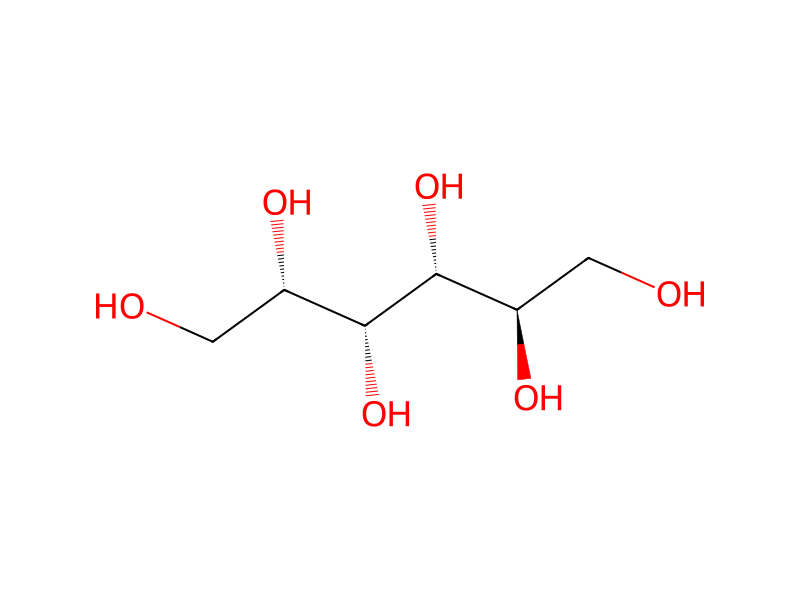
[CH:1](=O)[C:2]1[CH:7]=[CH:6][CH:5]=[CH:4][CH:3]=1.[OH:9][CH2:10][C@@H:11]([C@H:13]([C@@H:15]([C@@H:17]([CH2:19][OH:20])[OH:18])[OH:16])[OH:14])[OH:12].S(=O)(=O)(O)O>>[CH:1](=[C:19]([C@@H:17]([C@H:15]([C@@H:13]([C@@H:11]([CH2:10][OH:9])[OH:12])[OH:14])[OH:16])[OH:18])[OH:20])[C:2]1[CH:7]=[CH:6][CH:5]=[CH:4][CH:3]=1Participants
4



Procedure
A reactor was charged with 106 g (1 mole) of benzaldehyde, 270 g (1 mole) of a 70% aqueous solution of D-sorbitol and 20 g of 50% sulfuric acid, and they were reacted at 15° C. with stirring. Thirty minutes after the formation of fine crystals in the mixture within the reactor, the torque of the stirrer became about 3 times as high as that at the start of the reaction. At this time, the amount of monobenzylidene sorbitol formed was 42% of theory.
Workup
- customwere reacted at 15° C.
- customThirty minutes
- customhigh as that at the start of the reaction
Sources & evidence
- ORD record
- ord-4ac251a25f23434686294680157f4508
- Source dataset
- uspto-grants-1984_11
- Patent number
- US04483952
Reaction notes
Loading…