Potassium Carbonate → Carbamic acid, (4-amino-2-methyl-5-nitrophenyl)-, 2-chloroethyl ester
Reaction equation

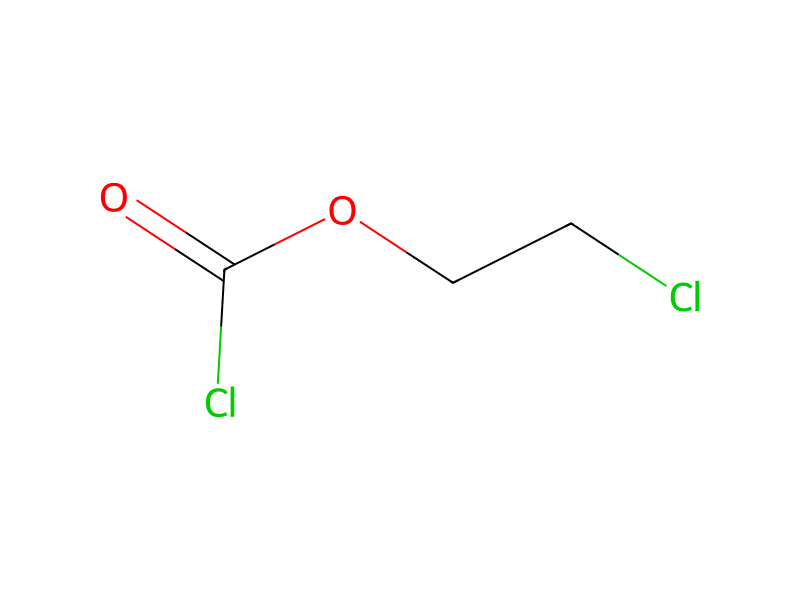
[CH3:1][C:2]1[C:7]([NH2:8])=[CH:6][C:5]([N+:9]([O-:11])=[O:10])=[C:4]([NH2:12])[CH:3]=1.C(=O)([O-])[O-].[K+].[K+].O1CCOCC1.Cl[C:26]([O:28][CH2:29][CH2:30][Cl:31])=[O:27]>O>[CH3:1][C:2]1[CH:3]=[C:4]([NH2:12])[C:5]([N+:9]([O-:11])=[O:10])=[CH:6][C:7]=1[NH:8][C:26](=[O:27])[O:28][CH2:29][CH2:30][Cl:31]Participants
6





Conditions
- Temperature
- 90 °C
Procedure
0.6 mol (100 g) of 4-methyl-2,5-diamino-nitrobenzene and 0.36 mol (50 g) of potassium carbonate are introduced into 500 ml of dioxane to which 145 ml of water have been added. The mixture is heated to 90° C., whilst stirring, and 0.6 mol (86 g) of chloroethyl chloroformate is then added gradually, in the course of 10 minutes. When the addition has ended, the heating is maintained for 10 minutes at 90° C. The reaction medium is cooled to 15° C. and the desired product is then filtered off. After washing with a small amount of dioxane and then with water and alcohol, the product is recrystallised from dioxane and then dried in vacuo. It melts at 192° C.
Workup
- additionhave been added
- additionWhen the addition
- temperaturethe heating is maintained for 10 minutes at 90° C
- temperatureThe reaction medium is cooled to 15° C.
- filtrationthe desired product is then filtered off
- washAfter washing with a small amount of dioxane
- customwith water and alcohol, the product is recrystallised from dioxane
- customdried in vacuo
Sources & evidence
- ORD record
- ord-7469fa6f88254cf9ba59b18eb10ef7d3
- Source dataset
- uspto-grants-1985_04
- Patent number
- US04511360
Reaction notes
Loading…