Butanal → Trimethylolpropane
Reaction equation
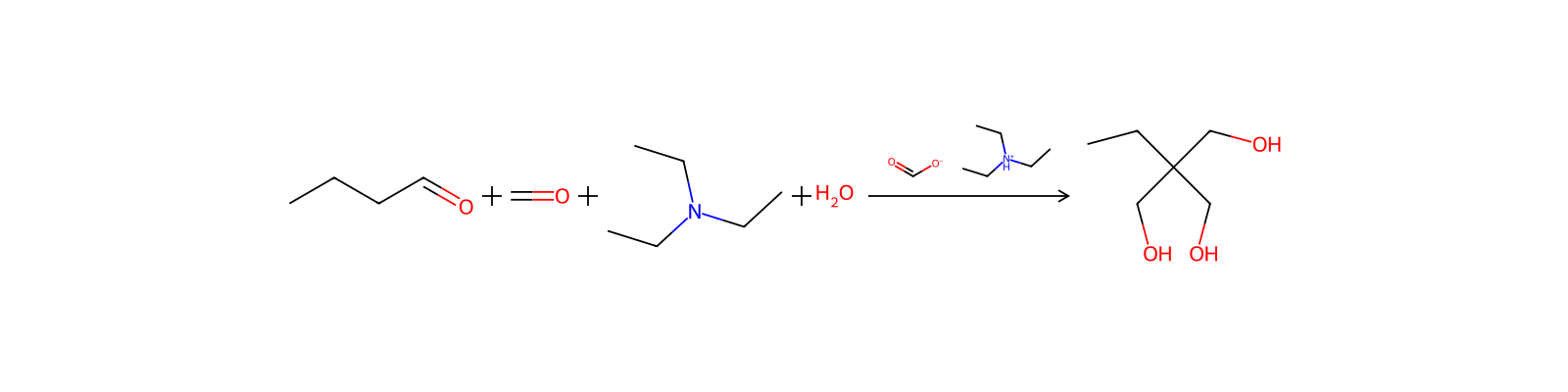
[CH:1](=[O:5])[CH2:2][CH2:3][CH3:4].[CH2:6]=[O:7].[CH2:8](N(CC)CC)C.[OH2:15]>C([O-])=O.C([NH+](CC)CC)C>[CH2:6]([C:2]([CH2:1][OH:5])([CH2:8][OH:15])[CH2:3][CH3:4])[OH:7]Participants
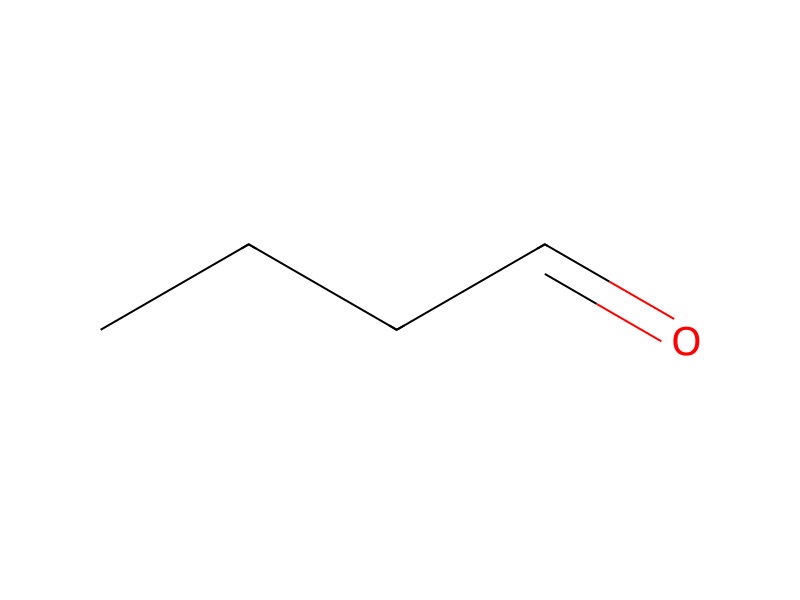
Reactant 4



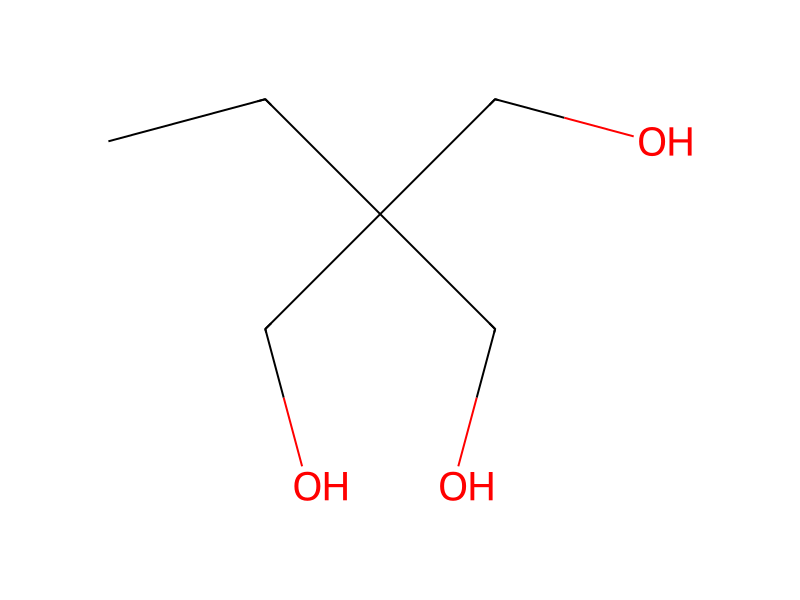
Product 1
Reagents, catalysts & solvents 1

Procedure
216 g (3 moles) of n-butyraldehyde, 1,200 g of 30% strength formalin solution (12 moles of formaldehyde), 450 g (4.5 moles) of triethylamine and 1,000 g of water are combined and the mixture is kept at 70° C. for 4 hours, after which first the water and free triethylamine and then the triethylammonium formate (bp. 110° C./20 mbar) formed during the reaction are distilled off under reduced pressure (20 mbar). The residue is mixed with an equal weight of water, and the mixture is subjected to continuous hydrogenation at 120° C. and under 60 bar, the hydrogenation catalyst consisting of CuO and Al2O3 with an atomic ratio of Cu to Al of 0.75:1. After the mixture has been worked up by distillation, 342 g (85% yield) of trimethylolpropane of boiling point 153° C./3 mbar and 28 g (7.6% yield) of di-trimethylolpropane of boiling point 185° C./3 mbar are isolated, the % yields being based on n-butyraldehyde.
Workup
- distillationare distilled off under reduced pressure (20 mbar)
- additionThe residue is mixed with an equal weight of water
- customis subjected to continuous hydrogenation at 120° C. and under 60 bar
Sources & evidence
- ORD record
- ord-1b1e98c0eb43485ba87db7f61c23dfcc
- Source dataset
- uspto-grants-1986_06
- Patent number
- US04594461
Reaction notes
Loading…