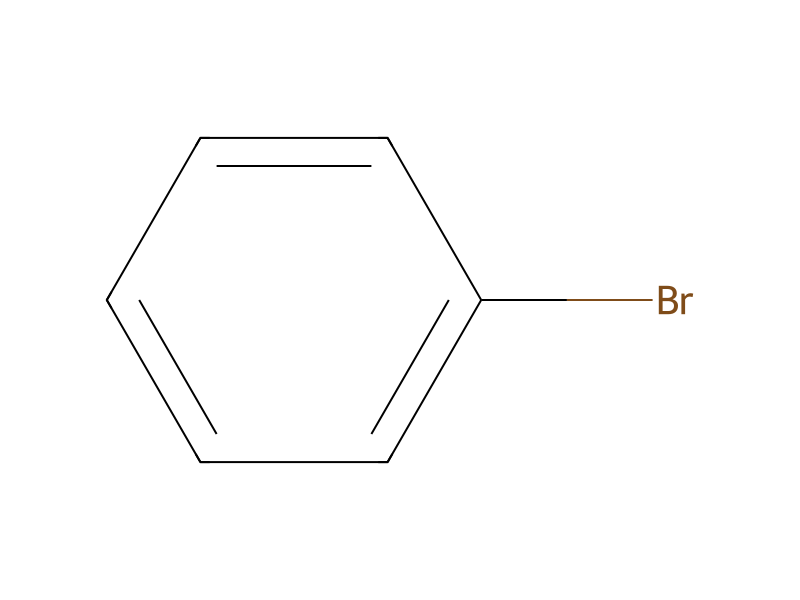
Bromobenzene → 2,4-Dimethoxy-N-phenylaniline
Reaction equation

[C:1]([NH:4][C:5]1[CH:10]=[CH:9][C:8]([O:11][CH3:12])=[CH:7][C:6]=1[O:13][CH3:14])(=O)[CH3:2].Br[C:16]1[CH:21]=CC=[CH:18][CH:17]=1.C(=O)([O-])[O-].[K+].[K+].[OH-].[K+]>[Cu].II.C1(C)C=CC=CC=1.C(O)CC(C)C>[C:1]1([NH:4][C:5]2[CH:10]=[CH:9][C:8]([O:11][CH3:12])=[CH:7][C:6]=2[O:13][CH3:14])[CH:18]=[CH:17][CH:16]=[CH:21][CH:2]=1Participants
Reactant 4



Product 1

Reagents, catalysts & solvents 4




Procedure
To a mixture of 58.5 g of N-acetyl-2,4-dimethoxyaniline and 70.7 g of bromobenzene, 29 g of anhydrous potassium carbonate, 2.1 g of copper powder and 0.8 g of iodine were added and reacted at a temperature of from 170° to 180° C. for 20 hours. Then, to this reaction mixture, 30 g of potassium hydroxide and 100 ml of isoamyl alcohol were added and reacted at a temperature of from 120° to 130° C. for 3 hours. To this reaction mixture, 300 ml of toluene was added, and the toluene layer was separated by liquid separation, washed with water, concentrated and then purified by distillation under reduced pressure, whereby 40 g of oily N-phenyl-2,4-dimethoxyaniline was obtained. The boiling point of this product was from 161° to 164° C./2 mmHg.
Workup
- additionwere added
- customreacted at a temperature of from 170° to 180° C. for 20 hours
- customreacted at a temperature of from 120° to 130° C. for 3 hours
- customthe toluene layer was separated by liquid separation
- washwashed with water
- concentrationconcentrated
- distillationpurified by distillation under reduced pressure
Sources & evidence
- ORD record
- ord-1e629998b0de4e64930cc97179c5810d
- Source dataset
- uspto-grants-1986_06
- Patent number
- US04594601
Reaction notes
Loading…