2,6-Dibromopyridine → HCID 86615446, compound
Reaction equation

I[C:2]1[CH:7]=[C:6]([CH3:8])[CH:5]=[C:4]([C:9]2[CH:14]=[CH:13][C:12]([C:15]([F:18])([F:17])[F:16])=[CH:11][CH:10]=2)[N:3]=1.[Br:19][C:20]1[CH:25]=[CH:24][CH:23]=[C:22](Br)[N:21]=1>[Li]CCCC.[Zn+2].[Br-].[Br-]>[Br:19][C:20]1[N:21]=[C:22]([C:2]2[CH:7]=[C:6]([CH3:8])[CH:5]=[C:4]([C:9]3[CH:14]=[CH:13][C:12]([C:15]([F:18])([F:17])[F:16])=[CH:11][CH:10]=3)[N:3]=2)[CH:23]=[CH:24][CH:25]=1Participants
4
Reactant 2
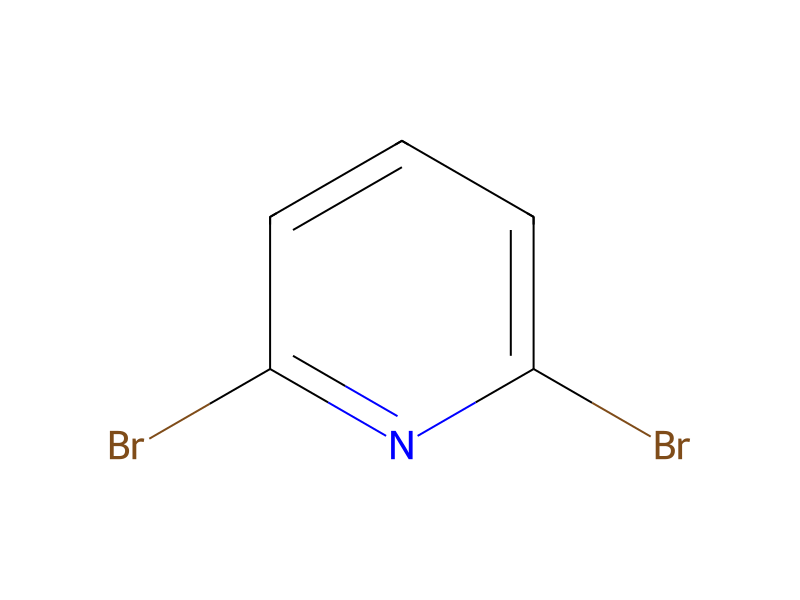

Product 1

Reagents, catalysts & solvents 1

Procedure
The title compound was prepared from 2-iodo-4-methyl-6-(4-trifluoromethyl-phenyl)pyridine (example A.58) (5.81 g, 16 mmol), n-BuLi/ZnBr2 and commercially available 2,6-dibromopyridine (5.31 g, 22.4 mmol) according to Tetrahedron Letters 1996, 37(15), 2537 and the general procedure IVc protocol b. Obtained as a white solid (2.34 g, 37%). MS (ISP) 393.0 [(M+H)+] and 395.0 [(M+2+H)+].
Sources & evidence
- ORD record
- ord-c90eae2dce1940a9a00e65a3db443584
- Source dataset
- uspto-grants-2010_01
- Patent number
- US07642264B2
Reaction notes
Loading…