Triethylamine → 4-Piperidineacetic acid
Reaction equation

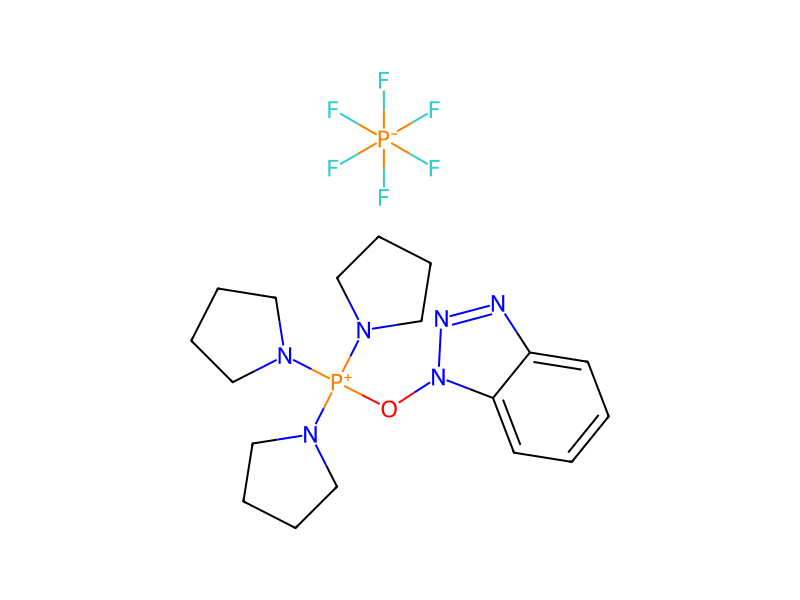
Cl.C1([CH:8]([CH:12]2[CH2:17][CH2:16][N:15](C3C=CC(NC(C4C=CC=CC=4C4C=CC(C(F)(F)F)=CC=4)=O)=CC=3)[CH2:14][CH2:13]2)[C:9]([OH:11])=[O:10])C=CC=CC=1.C1CN([P+](ON2N=NC3C=CC=CC2=3)(N2CCCC2)N2CCCC2)CC1.F[P-](F)(F)(F)(F)F.C(N(CC)CC)C.OCC(OC)=O>C(Cl)Cl.O>[NH:15]1[CH2:16][CH2:17][CH:12]([CH2:8][C:9]([OH:11])=[O:10])[CH2:13][CH2:14]1Participants
7
Reactant 4



Product 1

Reagents, catalysts & solvents 2


Procedure
A mixture of intermediate (24) (0.000084 mol), PyBOP (0.00017 mol) and triethylamine (0.5 ml) in DCM (5 ml) was stirred for 60 minutes at room temperature. Methyl hydroxyacetate (0.0001 mol) was added and the reaction mixture was stirred for 3 hours at 40° C., then over the weekend at room temperature. Water (2 ml) was added. The mixture was stirred for 15 minutes, then filtered through Extrelut™ and the organic filtrate was evaporated. The residue was purified by HPLC. The product fractions were collected and the solvent was evaporated, yielding 4-piperidineacetic acid, α-phenyl-1-[4-[[[4′-(trifluoromethyl)[1,1′-biphenyl]-2-yl]carbonyl]amino]-phenyl]-, 2-methoxy-2-oxoethyl ester (compound 20).
Workup
- stirringthe reaction mixture was stirred for 3 hours at 40° C.
- customat room temperature
- stirringThe mixture was stirred for 15 minutes
- filtrationfiltered through Extrelut™
- customthe organic filtrate was evaporated
- customThe residue was purified by HPLC
- customThe product fractions were collected
- customthe solvent was evaporated
Sources & evidence
- ORD record
- ord-4d2601247c1b491ba72e2c8291340216
- Source dataset
- uspto-grants-2010_01
- Patent number
- US07642378B2
Reaction notes
Loading…