ethyl 2-(5-nitro-1H-indol-2-yl)propanoate → ethyl 2-(5-amino-1H-indol-2-yl)propanoate
Reaction equation

[N+:1]([C:4]1[CH:5]=[C:6]2[C:10](=[CH:11][CH:12]=1)[NH:9][C:8]([CH:13]([CH3:19])[C:14]([O:16][CH2:17][CH3:18])=[O:15])=[CH:7]2)([O-])=O.O.O.[Sn](Cl)(Cl)(Cl)Cl>C(O)C.C(OCC)(=O)C.O.C([O-])(O)=O.[Na+]>[NH2:1][C:4]1[CH:5]=[C:6]2[C:10](=[CH:11][CH:12]=1)[NH:9][C:8]([CH:13]([CH3:19])[C:14]([O:16][CH2:17][CH3:18])=[O:15])=[CH:7]2Participants
7
Reactant 2

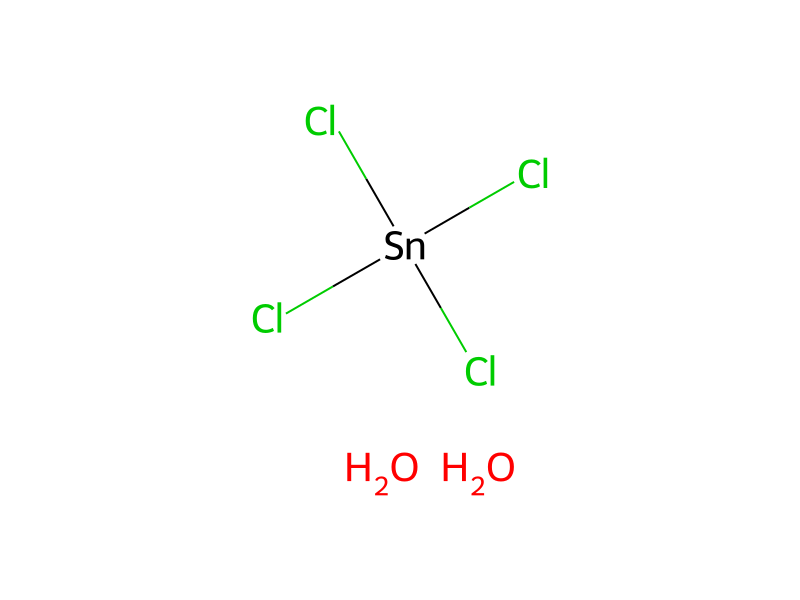
Product 1

Reagents, catalysts & solvents 4




Conditions
- Temperature
- 120 °C
Procedure
To a solution of ethyl 2-(5-nitro-1H-indol-2-yl)propanoate (0.10 g, 0.38 mmol) in ethanol (4 mL) was added tin chloride dihydrate (0.431 g, 1.91 mmol). The mixture was heated in the microwave at 120° C. for 1 h. The mixture was diluted with ethyl acetate before water and saturated aqueous NaHCO3 were added. The reaction mixture was filtered through a plug of celite using ethyl acetate. The organic layer was separated from the aqueous layer. The organic layer was dried over Na2SO4, filtered and evaporated under reduced pressure to give ethyl 2-(5-amino-1H-indol-2-yl)propanoate (0.088 g, 99%).
Workup
- additionwere added
- filtrationThe reaction mixture was filtered through a plug of celite
- customThe organic layer was separated from the aqueous layer
- dry with materialThe organic layer was dried over Na2SO4
- filtrationfiltered
- customevaporated under reduced pressure
Sources & evidence
- ORD record
- ord-f0c99d422d1b4fd38431968c77decb69
- Source dataset
- uspto-grants-2010_01
- Patent number
- US07645789B2
Reaction notes
Loading…