2-(5-nitro-1H-indol-2-yl)propan-1-ol → 2-(5-amino-1H-indol-2-yl)propan-1-ol
Reaction equation

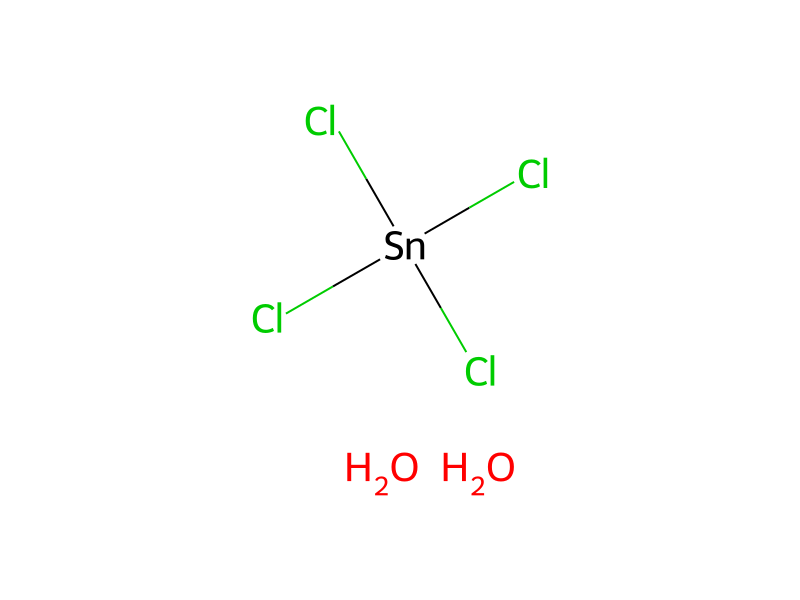
[N+:1]([C:4]1[CH:5]=[C:6]2[C:10](=[CH:11][CH:12]=1)[NH:9][C:8]([CH:13]([CH3:16])[CH2:14][OH:15])=[CH:7]2)([O-])=O.O.O.[Sn](Cl)(Cl)(Cl)Cl>C(O)C.C(OCC)(=O)C.O.C([O-])(O)=O.[Na+]>[NH2:1][C:4]1[CH:5]=[C:6]2[C:10](=[CH:11][CH:12]=1)[NH:9][C:8]([CH:13]([CH3:16])[CH2:14][OH:15])=[CH:7]2Participants
7
Reactant 2

Product 1

Reagents, catalysts & solvents 4




Conditions
- Temperature
- 120 °C
Procedure
To a solution of 2-(5-nitro-1H-indol-2-yl)propan-1-ol (0.13 g, 0.60 mmol) in ethanol (5 mL) was added tin chloride dihydrate (0.67 g, 3.0 mmol). The mixture was heated in the microwave at 120° C. for 1 h. The mixture was diluted with ethyl acetate before water and saturated aqueous NaHCO3 were added. The reaction mixture was filtered through a plug of celite using ethyl acetate. The organic layer was separated from the aqueous layer, dried over Na2SO4, filtered and evaporated under reduced pressure to give 2-(5-amino-1H-indol-2-yl)propan-1-ol (0.093 g, 82%).
Workup
- additionwere added
- filtrationThe reaction mixture was filtered through a plug of celite
- customThe organic layer was separated from the aqueous layer
- dry with materialdried over Na2SO4
- filtrationfiltered
- customevaporated under reduced pressure
Sources & evidence
- ORD record
- ord-f0fdf1bb8e6a4833b7a266cee791daff
- Source dataset
- uspto-grants-2010_01
- Patent number
- US07645789B2
Reaction notes
Loading…